


What is Brand Awareness?
Learn what brand awareness is, why it matters for your business, and how to build it effectively. Discover the four levels of brand awareness and proven strateg...
11 min read
A brand with zero awareness is invisible.
On this page
At its core, brand awareness is the degree to which your target audience can identify your brand under different conditions — whether they see your logo (aided) or name you spontaneously when thinking of a category (unaided).
A brand with zero awareness is invisible. At the other end, a brand with top-of-mind awareness — the first name consumers think of — commands disproportionate market share. Between those extremes sit the gradations that marketers track and optimize for.

Set up advanced tracking in minutes. No credit card required.
Marketing researchers typically distinguish three levels, though some frameworks add nuance beyond these. The three types most competitors agree on are:
Brand recognition (aided awareness). The consumer identifies your brand when shown a cue — your logo, packaging color, jingle, or name. Recognition confirms the brand has registered but does not guarantee it surfaces during a purchase decision. Example: you see the red-and-white script on a can and immediately know it is Coca-Cola.
Brand recall (unaided awareness). The consumer names your brand when prompted only with a product category. If someone asks “name a soda brand” and the response includes Coca-Cola, that is brand recall. This is a stronger signal than recognition because the brand lives in the consumer’s active memory.
Top-of-mind awareness. The very first brand a consumer names in a category — the one that occupies the peak position. Top-of-mind brands capture search traffic, word-of-mouth referrals, and purchase consideration before competitors even enter the frame.
These levels form what researchers call the awareness pyramid, adapted from David Aaker’s brand equity model. Most brands sit somewhere between “unaware” and “top-of-mind,” and the goal is to move consumers upward over time through consistent, repeated exposure.
Consider Nike. If a consumer walking through a mall spots the Swoosh on a storefront and thinks “that is Nike,” that is brand recognition. If Nike is the first brand they name, that is top-of-mind awareness.
Coca-Cola’s “Share a Coke” campaign is another frequently cited example. The campaign worked because it made the brand personally relevant, triggering both recognition (seeing your name on a can) and recall (remembering the experience later).
Be the first to know about new features and product updates.
Brand awareness is not vanity — it drives measurable business outcomes. A brand consumers do not know is a brand they will not buy from. More specifically:
These terms are often used interchangeably, but they describe distinct concepts. The table below clarifies the differences:
| Concept | Definition | Example | How to Measure |
|---|---|---|---|
| Brand awareness | The broad umbrella: how familiar consumers are with a brand at any level | “I know Coca-Cola exists” | — |
| Brand recognition | Identifying a brand when shown a visual or audio cue (aided) | Recognizing the Nike Swoosh without a label | — |
| Brand recall | Retrieving a brand from memory given only a category cue (unaided) | Naming “Tesla” when asked to list electric car brands | — |
| Top-of-mind awareness | The first brand recalled in a category | “Coca-Cola” as the first answer to “name a soft drink” | — |
The distinction matters practically: a brand can have strong recognition but weak recall. A startup that runs logo-heavy display ads may achieve recognition without recall — consumers know the logo when they see it but never think of the brand unprompted. Recall is the harder, more valuable target.
Building awareness is a long game — campaigns measured in weeks rarely move the needle.
Before spending on awareness, document what you are making people aware of. This means your brand values, visual identity, tone, and value proposition must be clear and consistent. Awareness campaigns amplify identity — they cannot create it.
Content creates repeated exposure. This includes blog posts, social media, podcasts, email newsletters, and video. Consistency across channels matters more than volume on any single one.
Digital influencers and affiliate partners extend reach into audiences that do not yet know your brand. In affiliate marketing specifically, each publisher promoting your product is effectively running a micro brand-awareness campaign to their own followers.
User-generated content, testimonials, reviews, and community engagement all signal that the brand is legitimate and worth noticing.
Paid channels — search ads, social media display, streaming TV — accelerate exposure. The key metric for awareness campaigns is reach (how many unique people see the message) and frequency (how often they see it), not clicks or conversions.
Partnerships with complementary, non-competing brands multiply reach instantly. Joint webinars, co-branded content, and cross-promotion expose each brand to the other’s established audience. This is especially effective for brands with small or zero existing awareness.
Repositioning might mean shifting channel mix, refreshing creative, or targeting a different audience segment.
Measuring awareness requires both quantitative and qualitative methods. Relying on a single metric produces an incomplete picture.
They measure:
These measure the incremental lift in awareness, recall, and purchase intent directly attributable to advertising spend.
Strong brand awareness makes every affiliate link more effective. When a consumer clicks an affiliate link and lands on a site they already recognize, trust transfers faster and conversion rates rise. Conversely, a brand with zero awareness asks its affiliates to do two jobs at once: introduce the brand and close the sale. That is a heavy lift.
Advertisers should also recognize that affiliates themselves are an awareness channel. Each publisher who writes about, reviews, or promotes your product is running a micro-campaign to their audience. A well-structured affiliate program with clear brand guidelines, creative assets, and competitive commissions turns publishers into a distributed awareness engine.
Practical steps for advertisers:
Publishers with strong personal or site-level brand awareness attract more traffic, convert at higher rates, and command better terms from merchant partners. A publisher’s brand is their credibility — readers return because they trust the recommendations. Building awareness for your publishing brand is as important as promoting any individual product.
Publishers also benefit from promoting brands with existing awareness. Recommending a brand consumers already recognize reduces the friction in the purchase decision. When a reader sees a review of a product from a brand they know, the publisher’s endorsement confirms rather than introduces — and confirmation converts faster than introduction.
Program managers should treat brand awareness as a program-level KPI, not just a marketing-department concern. Specific workflows:
Limitation to note: Affiliate marketing builds awareness gradually and unevenly. It is not a replacement for broad-reach advertising when rapid awareness growth is the goal. Affiliate-driven awareness accumulates across many small audiences rather than hitting a single large one. Program managers should position affiliate efforts as a complement to, not a substitute for, other awareness-building channels.
The 5 C’s framework is a strategic tool for evaluating brand positioning and is relevant to awareness-building because it defines what consumers become aware of. The five elements are:
Each “C” shapes what awareness means for a brand. A brand aware of its competitors, for instance, can position its awareness campaigns to occupy whitespace rather than compete directly on the same associations as market leaders.
Discover how affiliate marketing can help amplify your brand recognition, engage new audiences, and drive conversions. Start leveraging powerful strategies today.
Learn what brand awareness is, why it matters for your business, and how to build it effectively. Discover the four levels of brand awareness and proven strateg...
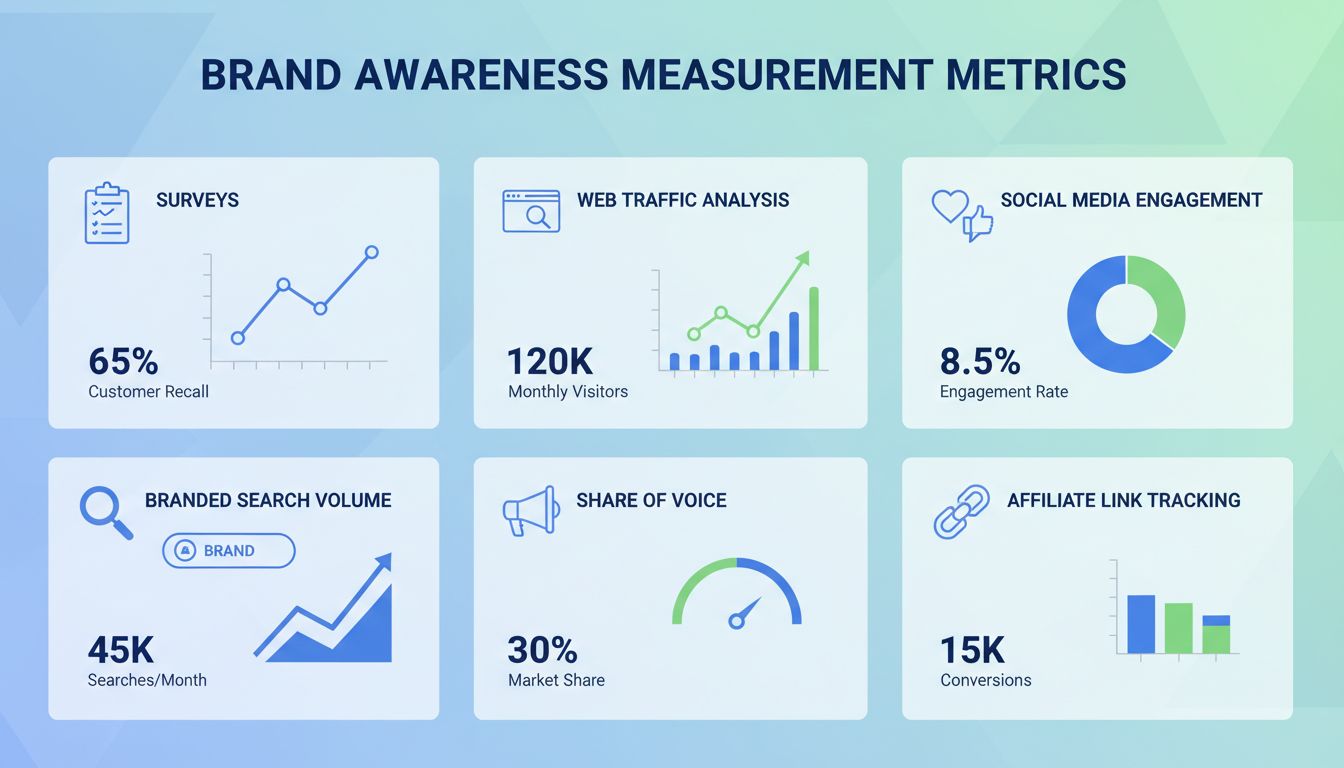
Learn how to measure brand awareness using surveys, web traffic analysis, social media metrics, and affiliate link tracking. Discover proven methods and tools t...
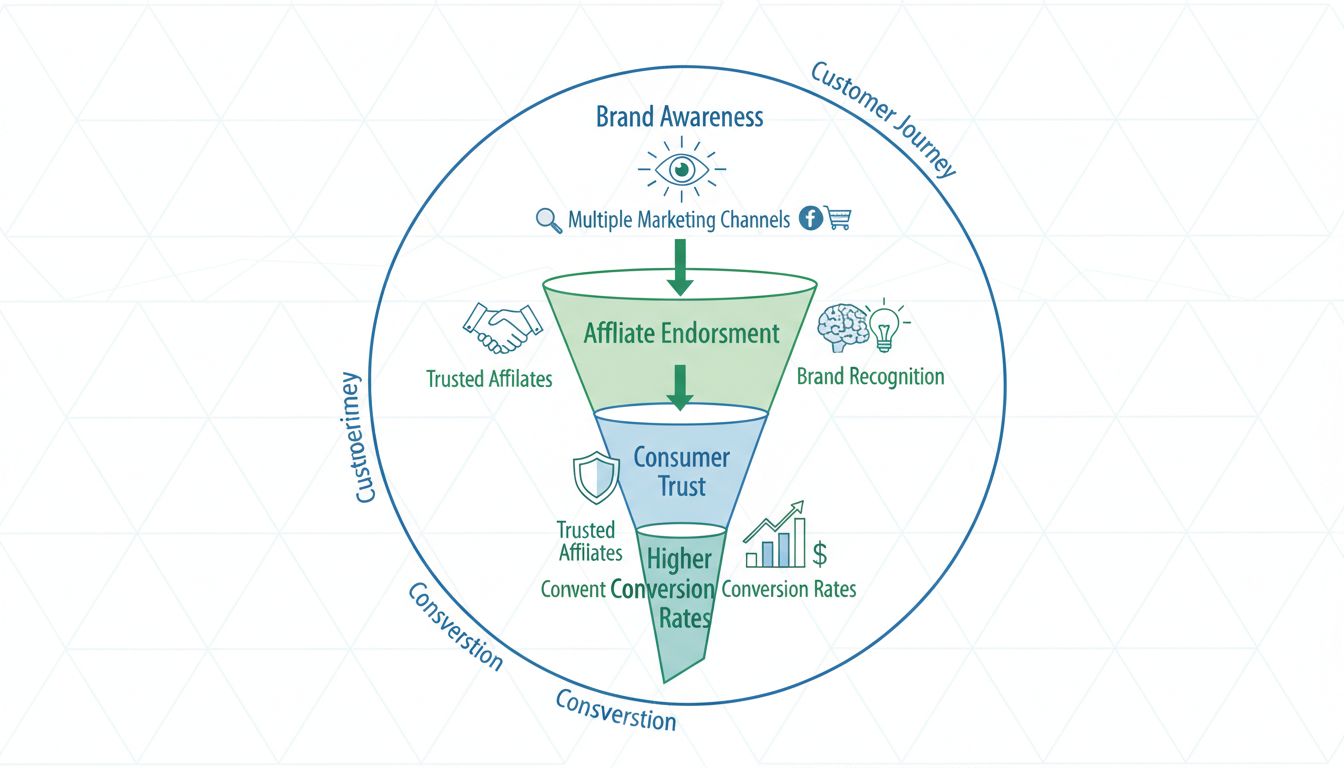
Discover why brand awareness is crucial for affiliate marketing success. Learn how it increases conversions, builds consumer trust, and enhances affiliate progr...
Join our community of happy clients and provide excellent customer support with Post Affiliate Pro.



Cookie Consent
We use cookies to enhance your browsing experience and analyze our traffic. See our privacy policy.