


What Are the Benefits of Direct Billing Flow?
Discover the comprehensive benefits of direct billing flow including time savings, error reduction, cost efficiency, improved cash flow, and enhanced customer s...
8 min read
Direct billing is a payment arrangement in which a service provider sends its invoice to a third party — typically an insurance company, a corporate employer, or a mobile network operator — and that third party pays the provider directly.
Direct billing is a payment arrangement in which a service provider sends its invoice to a third party — typically an insurance company, a corporate employer, or a mobile network operator — and that third party pays the provider directly. The end customer does not hand over cash or swipe a card at the time of service. Instead, the financial transaction happens behind the scenes between the provider and the payer.
In a typical direct bill scenario, the provider first verifies that the payer will cover the service. Once confirmed, the provider delivers the service, submits a claim or invoice, and receives payment from the third party on a defined billing cycle. The customer may still owe a copay, deductible, or uncovered balance, but the bulk of the transaction bypasses them entirely.
This definition spans several industries, and the mechanics shift depending on context:
The common thread is that the end user is decoupled from the payment event. That decoupling is what makes the direct billing flow both powerful and, in certain implementations, operationally complex.

Set up advanced tracking in minutes. No credit card required.
Although the exact steps vary by industry, every direct billing flow follows a predictable sequence. The table below maps the four most common industry variants side by side.
| Step | Insurance / Healthcare | Hotel Corporate Travel | Mobile Carrier Billing | B2B Trade Credit |
|---|---|---|---|---|
| 1. Eligibility check | Provider verifies coverage and pre-authorisation with insurer electronically | Hotel confirms the company has a direct billing agreement on file | Carrier identifies the subscriber via MSISDN (phone number) detection | Supplier checks the buyer’s credit limit and payment history |
| 2. Service delivery | Doctor visit, procedure, or hospital stay | Guest checks in and consumes room, dining, and incidentals | User clicks a confirmation button on a mobile landing page | Goods are shipped or services rendered against a purchase order |
| 3. Claim / invoice submission | Provider submits a CMS-1500 or UB-04 claim form with procedure and diagnosis codes | Hotel compiles all charges into a single folio and sends it to the corporate accounts-payable system | Carrier records the charge and adds it to the subscriber’s monthly bill | Supplier issues an invoice with payment terms (net-30, net-60) |
| 4. Payer adjudication | Insurer processes the claim, applies policy deductibles and coinsurance, and determines the payable amount | Employer reviews the folio, splits personal charges from business charges, and approves payment | Carrier collects the full amount from the subscriber on the next billing cycle | Buyer’s AP department approves the invoice and schedules payment |
| 5. Provider payment | Insurer remits the allowed amount to the provider directly | Employer pays the hotel via ACH, wire, or corporate card | Carrier settles with the merchant, typically keeping a percentage as a network fee | — |
| 6. Residual billing | Provider bills the patient for any remaining deductible, copay, or coinsurance | Employee reimburses the company for any personal charges identified during review | N/A — the subscriber pays the carrier directly | N/A — the transaction is between buyer and supplier only |
The flow takes anywhere from a few seconds (mobile carrier billing) to several weeks (insurance claims with manual review). What distinguishes a well-designed direct billing flow is how much of this sequence is automatic versus manual. Automated systems — particularly those that integrate with accounting platforms and provider networks — reduce processing time significantly and cut the error rate that manual reconciliation introduces.
In insurance and financial services, billing platforms typically support three distinct billing methods. Understanding these is essential for anyone managing receivables or designing payment flows.
Direct bill. The insurer bills the policyholder directly. The policyholder pays the insurer, and the insurer remits any agent commission separately, on its own schedule. This is the most common method for personal lines — auto, home, and individual health policies. The carrier controls the billing cycle, the payment instrument (credit card, bank account, or responsive/manual), and the data.
Agency bill. The producer — an insurance agency or broker — invoices the insured, collects the premium, and remits the net amount to the carrier after deducting commission. The agency owns the cash flow and the receivables data, but also carries the administrative burden of tracking past-due accounts and reconciling what was collected against what the carrier is owed.
List bill. The insurer bills a third-party account rather than the policyholder. A common example is a mortgage company that pays homeowners insurance through an escrow account and then recovers the premium from the borrower as part of the monthly mortgage payment. The policyholder never interacts with the insurance bill directly.
Each method carries different implications for cash flow timing, reconciliation workload, and data ownership. For affiliate program managers and advertisers evaluating billing integrations, the distinction matters because it determines who controls the transaction data and when commission events are recorded.
Be the first to know about new features and product updates.
In the insurance context, direct billing means the provider submits a claim to the insurer and the insurer pays the provider directly. The patient’s financial interaction is limited to any deductible, copay, or coinsurance amount identified during the eligibility check.
This model depends on provider networks — groups of hospitals and clinics that have signed agreements with a given insurer. In-network providers typically offer direct billing; out-of-network providers often require the patient to pay in full and file for reimbursement. Pre-authorisation is another critical gate: insurers frequently require advance approval for hospital admissions, surgeries, and high-cost diagnostics. Missing pre-authorisation can delay payment or result in a denied claim.
Modern direct billing platforms in insurance, such as Input 1’s Billing-as-a-Service, extend beyond simple invoice delivery. They manage the full policy lifecycle — automated commission payouts to agents, built-in compliance and audit controls, self-service portals for policyholders, and white-labeled customer support. These systems treat billing as a strategic function rather than a back-office afterthought.
Direct billing in hotels works on a fundamentally different premise: the guest’s employer, not an insurer, is the third-party payer. The company negotiates a direct billing agreement with the hotel or hotel chain, and the employee’s stay is charged to a corporate account.
The process looks straightforward on the surface: the traveler checks in, the front desk confirms the corporate billing arrangement, the traveler consumes services, and the hotel sends a consolidated monthly invoice to the employer. In practice, significant complexity hides beneath. When employees add personal charges — minibar, room service, pay-per-view — the employer’s accounts-payable team must split the folio, bill the employee for personal items, and pay only the business portion to the hotel. Cancellation policies add another layer: if an employee cancels late, the hotel may charge a penalty, and determining whether the company or the employee absorbs that cost requires clear internal policy.
Platforms like Engine and TreviPay address these challenges by centralizing corporate travel spend into a single system with project-level charge tagging, automated reconciliation, and spend controls that prevent unauthorized charges from reaching the invoice in the first place.
In the mobile ecosystem, direct billing flow describes the mechanism by which a digital merchant charges a purchase to the user’s mobile phone account. The user clicks a confirmation button on a mobile landing page; the carrier identifies the subscriber through MSISDN detection, authenticates the transaction, and adds the charge to the subscriber’s next bill.
This flow is heavily used for digital content — streaming subscriptions, in-app purchases, mobile games, wallpapers, and premium SMS services. Its primary advantage is friction reduction: the user never enters card details, never leaves the merchant’s page, and completes the purchase in one or two clicks.
For affiliate marketers promoting mobile content offers, the direct billing flow is a conversion-optimized payment path. The affiliate directs traffic to a landing page; the carrier handles identification and billing silently; the affiliate earns a commission when the transaction completes. The entire sequence happens without the user navigating a traditional checkout form.
In B2B commerce, direct billing takes the form of trade credit: a supplier delivers goods or services and sends an invoice on net-30, net-60, or net-90 terms. The buyer’s accounts-payable department processes the invoice through its approval workflow and remits payment on the agreed schedule.
Unlike insurance or hotel direct billing, the B2B variant rarely involves a third-party intermediary. The supplier bills the buyer directly. The operational challenge is not claim adjudication but credit risk management — the supplier must evaluate the buyer’s ability to pay before extending terms — and collections: tracking outstanding invoices, sending automated reminders, and escalating past-due accounts.
The distinction between direct billing and reimbursement is one of the most important concepts for anyone designing or using payment flows.
| Direct Billing | Reimbursement | |
|---|---|---|
| Who pays the provider? | The third-party payer (insurer, employer, carrier) | The customer pays upfront, then seeks repayment |
| Customer out-of-pocket at service | Limited to copay, deductible, or uncovered portion | Full amount |
| Paperwork burden on customer | Minimal — handled between provider and payer | Significant — customer files claim with receipts and invoices |
| Time to provider payment | Days to weeks, depending on the billing cycle | Immediate from customer; reimbursement cycle is separate |
| Risk | Provider carries the risk of claim denial | Customer carries the risk of reimbursement denial or delay |
| Common in | In-network healthcare, corporate travel, mobile payments | Out-of-network care, freelance expenses, traditional expense reporting |
The reimbursement model is still common for outpatient appointments at out-of-network clinics, independent contractor expenses, and international medical treatment where the provider has no direct billing agreement with the patient’s insurer. In those cases, the patient must pay first, collect itemized invoices and receipts, and submit a claim — a process that can take weeks or months and often involves back-and-forth with the insurer over documentation.
Faster provider payment cycles. Because the provider bills the payer directly — and the payer is typically a large institution with established payment processes — compensation arrives more predictably than when individual customers must initiate payment. For small practices and clinics, this predictability supports cash flow stability.
Reduced customer friction. A direct billing flow removes the payment step from the customer experience. In mobile carrier billing, this translates to higher conversion rates. In healthcare, it means a patient focuses on treatment rather than finances. In corporate travel, an employee never carries a hotel charge on a personal card.
Streamlined administration. Direct billing automates much of the claims and invoicing process. Electronic claim submission, automatic payment reconciliation, and integrated provider networks reduce the manual effort that traditional billing requires. For providers, this means fewer staff hours spent on paperwork and collections.
Financial transparency. When coverage is confirmed during the eligibility check — whether by an insurer, employer, or carrier — the customer knows their financial obligation upfront. There are no surprise bills, no rejected claims discovered weeks later, and no ambiguity about what is covered and what is not.
Consolidated reporting. For corporate payers, direct billing consolidates hundreds of individual transactions into a single monthly invoice. This makes spend analysis, budgeting, and audit trails far simpler than chasing individual receipts across employees.
Reconciliation overhead. When a carrier or third-party payer controls the payment flow, the provider receives payment data on the payer’s schedule and in the payer’s format. Matching those payments to expected revenue — especially across multiple carriers with different remittance schedules and statement formats — becomes a recurring operational cost. In insurance, direct bill reconciliation is often cited as the single largest back-office time drain for agencies managing mixed books of business.
Loss of data control. With direct bill, the payer owns the transaction data until they choose to share it. The provider or agent learns what they earned when the statement arrives — not when the transaction occurred. For affiliate program managers, this gap between conversion event and payment confirmation can complicate commission attribution and payout timing.
PCI compliance burden. In payment-gateway contexts — such as Yuno’s Direct Flow or Tap’s direct payment flow — the merchant collects card details on their own infrastructure rather than redirecting to a hosted payment page. This gives the merchant full control over the checkout experience but requires PCI DSS certification. The compliance burden is material: failing to meet PCI standards exposes the merchant to fines and data-breach liability.
Carrier and network dependency. In mobile carrier billing, the merchant depends on the carrier for subscriber identification, transaction authentication, and settlement. If the carrier’s MSISDN detection fails, or if the subscriber is roaming, or if the carrier changes its billing policies, the transaction may not complete. The merchant has limited recourse.
Personal charge disputes. In hotel direct billing, personal charges added to a corporate folio create friction between employer and employee. Without clear policy and real-time charge tagging, what looks like a simple consolidated invoice can turn into a monthly dispute cycle.
Modern direct billing platforms increasingly connect to accounting and ERP systems through APIs and automated data feeds. This integration addresses the reconciliation problem described above.
When a direct billing platform integrates with an accounting system, each invoice, payment, and adjustment flows from the billing system into the general ledger automatically. Payment matching — reconciling what the payer remitted against what the provider expected — becomes a software function rather than a manual spreadsheet exercise. For agencies managing direct bill policies across multiple carriers, this integration is the difference between a monthly reconciliation project and a real-time dashboard.
Key integration points include:
Systems that lack this integration — still common among insurers running legacy platforms — force teams to export statements, manipulate spreadsheets, and manually key data into accounting software. The operational cost of that technical debt shows up most clearly in the billing and reconciliation workflow.
Leverage direct billing flow to simplify payments, boost conversions, and maximize affiliate earnings. Discover how easy it is to integrate direct billing into your strategies.
Discover the comprehensive benefits of direct billing flow including time savings, error reduction, cost efficiency, improved cash flow, and enhanced customer s...
Mobile billing charges purchases to your phone bill instead of a card. Learn how DCB works, merchant costs, and affiliate use cases.
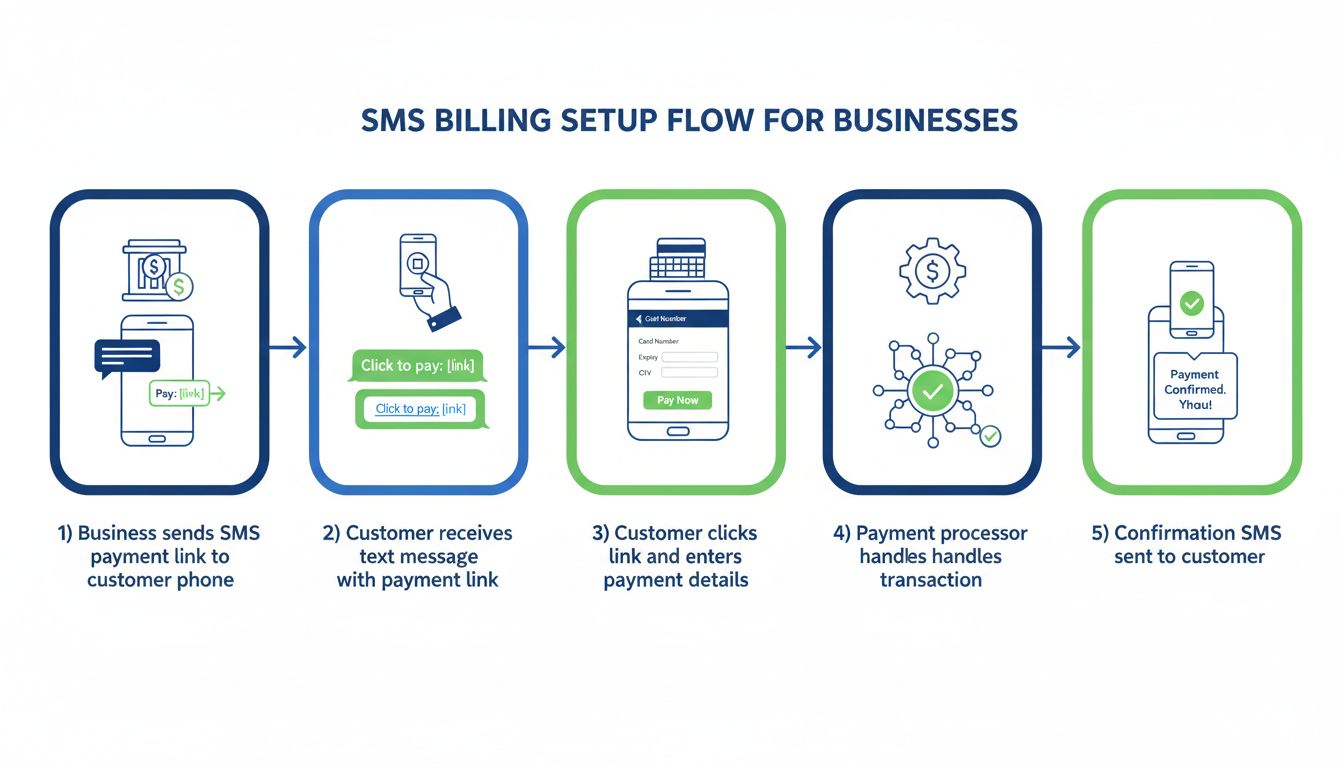
Complete guide to setting up SMS billing for your business. Learn about SMS payment providers, integration steps, security compliance, and best practices for te...
Join our community of happy clients and provide excellent customer support with Post Affiliate Pro.


Cookie Consent
We use cookies to enhance your browsing experience and analyze our traffic. See our privacy policy.