


Affiliate Network vs Program: Key Differences Explained
Discover the critical differences between affiliate networks and programs. Learn about control, costs, data ownership, and which solution is best.
9 min read
In practice, this means a small SaaS company, independent game studio, solo developer, or niche e‑commerce brand installs or subscribes to affiliate software, sets commission rules, generates unique referral links for each affiliate, and pays commissions straight to those affiliates — typically through PayPal, Wise, or direct bank transfer.
On this page
In practice, this means a small SaaS company, independent game studio, solo developer, or niche e‑commerce brand installs or subscribes to affiliate software, sets commission rules, generates unique referral links for each affiliate, and pays commissions straight to those affiliates — typically through PayPal, Wise, or direct bank transfer. No middleman network takes a cut.
Directories like Indie Affiliate (indieaffiliate.io) now index hundreds of such programs, letting creators compare rates, structures, and terms before they apply.

Set up advanced tracking in minutes. No credit card required.
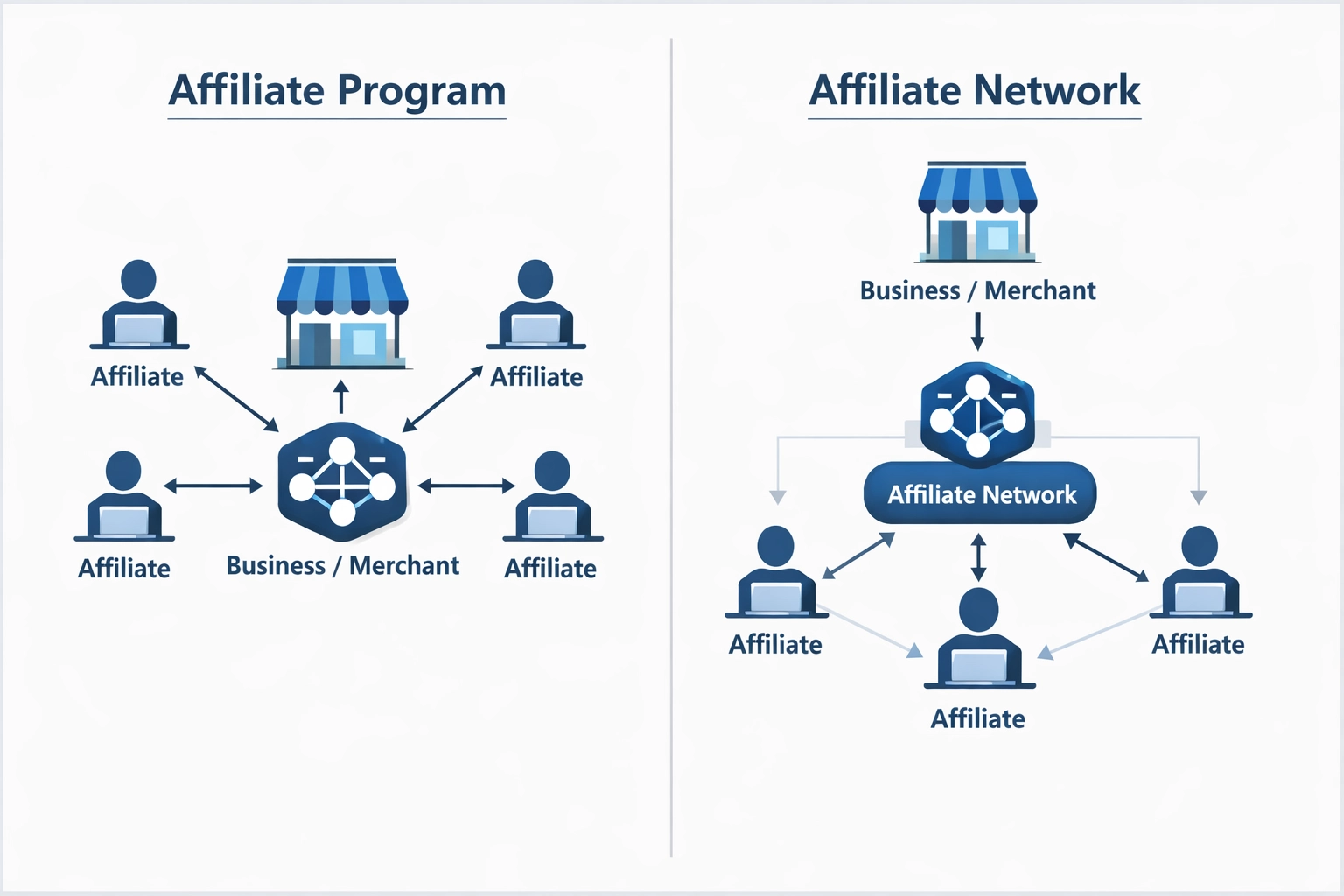
An affiliate network sits between the merchant and the affiliate. The network hosts the program, provides a shared dashboard, handles tracking, and often manages payments.
An indie program removes that layer entirely. The merchant chooses the software, sets the commission structure (one‑time, recurring, tiered, or flat fee), defines the cookie window, and approves or declines affiliates individually. Every part of the program reflects the merchant’s own brand, not a network’s template.
Because no network takes a cut, indie programs routinely offer more generous commissions.
Payments in indie programs flow directly: the merchant pays the affiliate through a payment processor, not through a network’s delayed payout cycle. The trade‑off is that the affiliate must trust the merchant’s own tracking and payout reliability — there is no network to mediate disputes.
| Feature | Indie Affiliate Program | Affiliate Network |
|---|---|---|
| Who runs it | Merchant directly | Third‑party platform |
| Software | — | Network‑provided |
| Network fees | None | — |
| Payout method | PayPal, Wise, crypto, direct bank | Network‑managed; often Net‑30 or longer |
| Affiliate dashboard | Per‑program; varies by software | Standardized across all programs |
| Dispute resolution | Merchant and affiliate work it out directly | Network support team |
| Cookie window | Merchant‑defined | Network‑defined or merchant‑adjustable within limits |
The merchant installs or subscribes to affiliate software that integrates with their payment platform — typically Stripe, Paddle, or Shopify. The software generates a unique referral link for each approved affiliate. When a visitor clicks that link, a cookie is set in their browser. If the visitor completes a purchase (or, for SaaS, starts a paid subscription) within the cookie window, the software attributes the sale to that affiliate and calculates the commission.
The cookie window — commonly 30, 60, or 90 days in indie SaaS programs — determines how long after a click the affiliate can still receive credit. Most indie affiliate platforms use first‑click or last‑click attribution, though some let the merchant configure the model.
Affiliates log into a dashboard to see their performance: clicks, conversions, earned commissions, and payout history. The merchant sees the same data aggregated across all affiliates. Good software updates these metrics automatically and in real time — neither side needs to reconcile spreadsheets manually.
Indie programs typically pay affiliates once a minimum threshold is reached. For example, IndieGala’s affiliation program sets a $100 minimum and pays within 7 working days of reaching it, supporting PayPal, WebMoney, Bitcoin, Ethereum, and Litecoin. Other programs use lower thresholds — $25 or $50 — and pay monthly via PayPal or Wise. The specifics vary by merchant, so affiliates should review each program’s terms before promoting.
Be the first to know about new features and product updates.
That margin can go directly into higher commissions, attracting better affiliates without increasing the customer acquisition cost.
Indie programs let merchants build direct, friendly working relationships with their affiliates. Instead of speaking through a network’s support desk, an affiliate can email or message the founder. This personal connection often produces better promotional content — the affiliate genuinely understands the product because they have spoken with the person who built it. For creators — bloggers, YouTubers, newsletter authors — that direct line can mean faster answers to questions, custom promo assets, and occasionally higher negotiated rates for strong performance.
For a bootstrapped indie business, an affiliate program is performance‑based growth: the merchant pays only when a sale happens. There is no upfront ad budget, no retainer for an agency. If the product has healthy margins and a clear value proposition, a well‑run indie program can drive customer acquisition that scales with revenue. Many indie hackers on platforms like Indie Hackers report that affiliate referrals became their second‑largest acquisition channel after organic search, all without paid ads.
IndieGala, the independent game bundle and store platform, runs its own affiliation program. Affiliates earn a 15% commission on bundle sales and 3% on store purchases. The program uses Tapfiliate as its third‑party tracking layer, and affiliates can promote any deal by appending ?ref=[affiliate_referral_id] to any IndieGala URL. Registration is automatic, and affiliates gain immediate access to a dashboard with reporting, conversion data, and asset downloads. The program forbids self‑referral (using your own affiliate link to buy for yourself), and it pays via PayPal, WebMoney, or cryptocurrency once the $100 minimum threshold is met.
That structure is common among SaaS‑tool indie programs: recurring for a defined window or lifetime, not just a single payout.
PromoteKit, another affiliate‑software vendor, offers a 25% lifetime commission — one of the more aggressive structures in the space and a direct example of how indie programs can outbid networks when no intermediary takes a cut.
A standard e‑commerce or SaaS affiliate program assumes an always‑open store with permanent tracking links. Neither Kickstarter nor Indiegogo runs its own built‑in affiliate program that pays commission to outside promoters.
Instead, campaign creators use third‑party tools — such as Kickbooster or Krowdster — that overlay affiliate tracking on top of the crowdfunding platform. These tools are themselves examples of indie affiliate infrastructure built for a specific, constrained use case.
A tool like Kickbooster sits between the campaign and the affiliates:
That risk sits entirely on the affiliate.
Suppose a campaign creator offers a 20% commission and a YouTube creator brings in $10,000 in pledges through their referral link.
If the campaign fails to fund and all pledges are void, the affiliate earns nothing — but the campaign also pays nothing. That zero‑risk‑until‑funded mechanic makes crowdfunding affiliate programs fundamentally different from standard e‑commerce setups.
| Approach | Best for | Cost model | Risk |
|---|---|---|---|
| Open indie affiliate program (via Kickbooster/Krowdster) | Campaigns that want broad, performance‑based reach | — | Only pays if campaign funds |
| Curated influencer deal (flat‑fee sponsorship) | Campaigns with budget for a known creator | Fixed fee upfront, regardless of pledges | Pays whether or not campaign funds |
| Both (affiliate program + 1–2 curated deals) | — | Mix of performance fees and flat fees | Diversified; flat fees carry funding‑independent risk |
When selecting software to run an indie affiliate program, prioritize these capabilities:
| Software | Starting Price (2026) | Best For |
|---|---|---|
| Rewardful | — | Stripe‑native SaaS; all‑in‑one |
| Tapfiliate | — | Invite‑only programs; integrations |
| Reditus | — | B2B SaaS; marketplace access |
| PromoteKit | — | Stripe‑native; lifetime tracking |
| Trackli | — | Solo founders; free up to 5 referrals/month |
Pricing varies by affiliate count, feature tier, and whether you need a marketplace. The key is to pick software that fits your payment stack — changing later means migrating affiliate links and potentially losing attribution data.
Discover how managing your own Indie Program can help you maximize profits, customize your approach, and engage directly with affiliates.
Discover the critical differences between affiliate networks and programs. Learn about control, costs, data ownership, and which solution is best.
In-house is an affiliate program managed by a merchant using just an affiliate software. Check out the article to learn more about the benefits.
What is an affiliate network? A platform connecting advertisers with publishers to earn commissions on sales. Learn how they work.
Join our community of happy clients and provide excellent customer support with Post Affiliate Pro.




Cookie Consent
We use cookies to enhance your browsing experience and analyze our traffic. See our privacy policy.