


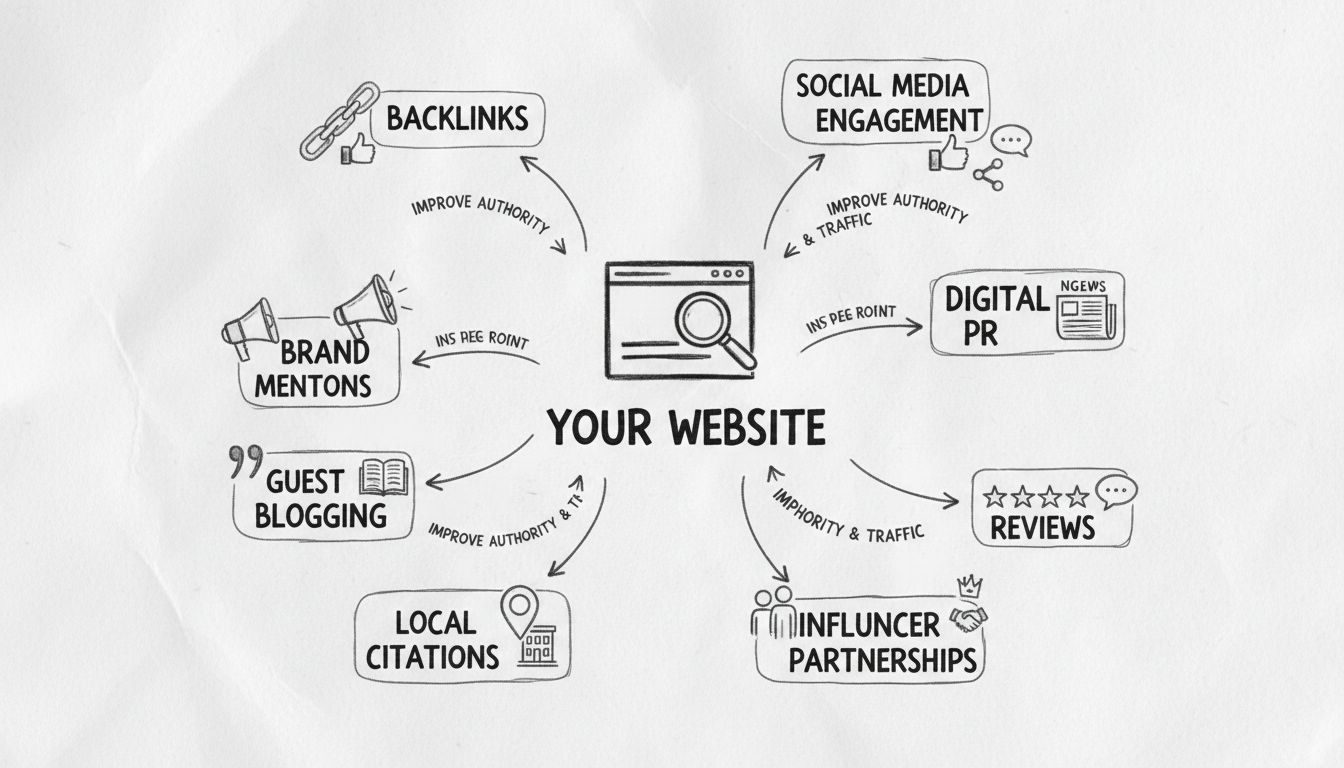
What Are Some Off-Page SEO Elements?
Discover the most important off-page SEO elements including backlinks, social media engagement, brand mentions, and digital PR. Learn how to build authority and...
11 min read
Off-page SEO is work outside a website that can influence how people and search engines discover and assess it, including earned links, relevant mentions and public relations. For affiliate publishers, it complements useful on-page content and technical accessibility; it does not justify buying links intended to manipulate rankings.
Off-page SEO is work outside a website that can influence how people and search engines discover and assess it, including earned links, relevant mentions and public relations. For affiliate publishers, it complements useful on-page content and technical accessibility; it does not justify buying links intended to manipulate rankings.
| Pillar | Scope | Examples |
|---|---|---|
| On-page SEO | Everything on your own domain | Keywords, headings, meta tags, internal links, content quality |
| Off-page SEO | External signals pointing to your domain | Backlinks, brand mentions, reviews, social shares, guest posts |
| Technical SEO | Site architecture and infrastructure | Crawlability, page speed, structured data, mobile rendering, HTTPS |
Some practitioners treat local SEO as a fourth category because it blends on-page (local landing pages), off-page (citations, Google Business Profile), and technical (local schema) elements. For most sites, however, the three-pillar model is the cleanest framework.
The core logic of off-page SEO is straightforward: search engines cannot evaluate every page on its declared merits alone. They lean on external signals to validate claims of authority. When a well-known industry site links to your content, it transfers a portion of its own credibility — what SEOs call “link equity” or “authority.” When multiple respected sources reference your brand, engines interpret that pattern as evidence of genuine relevance.

Set up advanced tracking in minutes. No credit card required.
Search engines use off-page signals to answer one question: does the wider web trust this site? Every backlink functions as an editorial citation. A page about retirement planning linked from The Wall Street Journal carries fundamentally different weight than one linked from an anonymous Blogger account. Google’s original PageRank patent described this as counting citations from authoritative sources — and while the algorithms have evolved dramatically, the principle persists.
Off-page factors matter because they are harder to manipulate at scale. A competitor can copy your on-page content. They cannot easily replicate years of earned media coverage, genuine editorial backlinks, or thousands of authentic customer reviews. That asymmetry makes off-page SEO a durable competitive moat.
Google’s Search Quality Rater Guidelines define E-E-A-T — Experience, Expertise, Authoritativeness, Trustworthiness — as the framework for evaluating content quality. Off-page signals are often the only way search engines can assess these qualities at scale:
A site with strong on-page implementation but no external trust signals may satisfy the technical requirements of E-E-A-T without meeting its intent. Off-page SEO closes that gap.
These systems synthesize answers from multiple sources and rely heavily on external signals to determine which sources to cite. Pages that earn frequent brand mentions and backlinks across authoritative domains are more likely to be surfaced in AI-generated answers.
Backlinks remain the strongest individual off-page signal. A backlink is a hyperlink from one domain to another — essentially a vote of confidence. The value of each link depends on:
Google’s link spam policies explicitly penalize paid links, excessive link exchanges, and automated link creation.
A brand mention is any reference to your brand, product, or domain — even without a hyperlink. Search engines increasingly treat unlinked brand mentions as soft citations. A pattern of mentions across news sites, trade publications, podcasts, and industry blogs signals that your brand is a recognized entity in its space.
Digital PR operationalizes this: pitching journalists, securing expert commentary opportunities, publishing original research that attracts coverage, and responding to HARO (Help a Reporter Out) queries. The goal is editorial coverage — not a link, though links often follow.
For businesses with physical locations or geo-specific service areas, local off-page SEO is essential. The primary tactic is maintaining an accurate, fully populated Google Business Profile with consistent NAP (Name, Address, Phone) data across all citation sources — Yelp, Bing Places, Apple Maps, and industry-specific directories. Review volume, recency, and response rate all factor into local pack rankings.
Social signals — shares, likes, comments — are not direct ranking factors. Google has stated this explicitly. However, content that performs well on social platforms generates secondary effects that do influence rankings: increased visibility leads to more organic backlinks, more brand searches, and more brand mentions. Social media functions as a distribution engine that amplifies everything else.
Guest posting — writing articles for other reputable sites in your niche — remains effective when done at quality scale. Avoid mass guest posting across low-authority blogs; Google has devalued these for years.
Online reviews on platforms like Trustpilot, G2, Capterra, and Google Business Profile influence both click-through rates and local rankings. For SaaS and affiliate-driven businesses, a strong review profile directly impacts conversion rates. Responding to negative reviews professionally and promptly also signals trustworthiness to both users and search engines.
Be the first to know about new features and product updates.
The most reliable methods include:
Several off-page tactics that worked a decade ago now carry active risk. Distinguishing current practice from obsolete advice is essential.
| Obsolete (Avoid) | Current Practice (2026) |
|---|---|
| Mass directory submissions | Selective, niche-relevant directory listings with real editorial standards |
| Article spinning and article directories | Original content published on reputable third-party sites |
| Automated blog commenting | Genuine community participation on relevant forums and social platforms |
| Private Blog Networks (PBNs) | Building your own genuine sister brands and microsites with real audiences |
| Paid link schemes | Earning editorial links through merit; properly nofollowing sponsored links |
| Keyword-stuffed anchor text | Natural, varied anchor text that prioritizes readability |
| Exact-match domain stacking | Building one primary domain with genuine authority |
| Reciprocal link schemes | Natural reciprocal links that make editorial sense, at low volume |
| Forum profile link spam | Authentic participation with or without links |
| Social bookmarking automation | Organic social promotion on platforms where your audience is active |
Manual actions — where a human reviewer penalizes a site — still occur for egregious cases. The safest principle: if the primary purpose of an activity is to generate a link rather than to provide value to a real audience, it is likely obsolete or soon will be.
Measuring off-page SEO requires external tools, since the signals originate outside your domain. The standard toolkit includes:
Key metrics to track monthly:
| Metric | What It Tells You |
|---|---|
| Total referring domains | Breadth of your backlink profile |
| Domain Authority / Domain Rating | Comparative ranking strength |
| New vs. lost backlinks | Velocity and retention of earned links |
| Brand mention volume | Awareness and PR reach |
| Top-linked pages | Which content earns the most external trust |
Off-page SEO directly affects an affiliate program’s recruitment funnel. Affiliates evaluate programs partly by searching for them. If your program’s landing page ranks well for terms like “best [niche] affiliate program,” you attract more applications from quality affiliates. Conversely, if third-party review sites comparing affiliate networks rank above your own page, those intermediaries control your pipeline.
Encourage existing affiliates to link to your program page from their resource lists. Monitor brand mentions of your program name to convert unlinked references into links.
Limitations: Affiliate program pages are inherently commercial. They compete against content-heavy informational pages for backlinks. A program page rarely earns links as easily as a blog post. Mitigate this by housing program information alongside genuinely useful resources — payment guides, niche comparisons, integration documentation.
For merchants running in-house affiliate programs alongside paid advertising, off-page SEO serves as a cost-multiplying channel. Paid ads stop delivering traffic when the budget runs out. Organic rankings built through off-page authority continue generating traffic without marginal cost.
Practical workflow: Use digital PR to place stories about your product in relevant media. Each editorial mention generates referral traffic and strengthens the domain’s backlink profile. Coordinate with your affiliate team: when major publications feature your product, affiliates can reference that coverage in their own content, creating a compounding effect.
Limitations: Off-page SEO is a long-term investment. Campaigns can take six to twelve months to show measurable ranking movement. Set expectations accordingly and do not judge off-page efforts by weekly traffic fluctuations.
Publishers — including affiliate content sites — live and die by organic search traffic. Their entire revenue model depends on ranking for high-volume informational and commercial keywords. Off-page SEO, particularly backlink acquisition, is the primary differentiator between publishers who rank in positions one through three and those who remain on page two.
Practical workflow: Invest in original data collection. One well-researched data study can earn more backlinks than fifty ordinary blog posts. Combine this with a systematic unlinked-brand-mention campaign: use Ahrefs or Semrush to find sites that mention your publication without linking, and reach out with a brief, polite request.
Limitations: Publishers in competitive niches (finance, health, technology) face high barriers. The incumbent domains have spent years accumulating authority. New publishers should target underserved subtopics where the competitive backlink threshold is lower, then expand outward.
Explore proven off-page SEO strategies to grow your website's authority and maximize your affiliate marketing results with Post Affiliate Pro.
Discover the most important off-page SEO elements including backlinks, social media engagement, brand mentions, and digital PR. Learn how to build authority and...
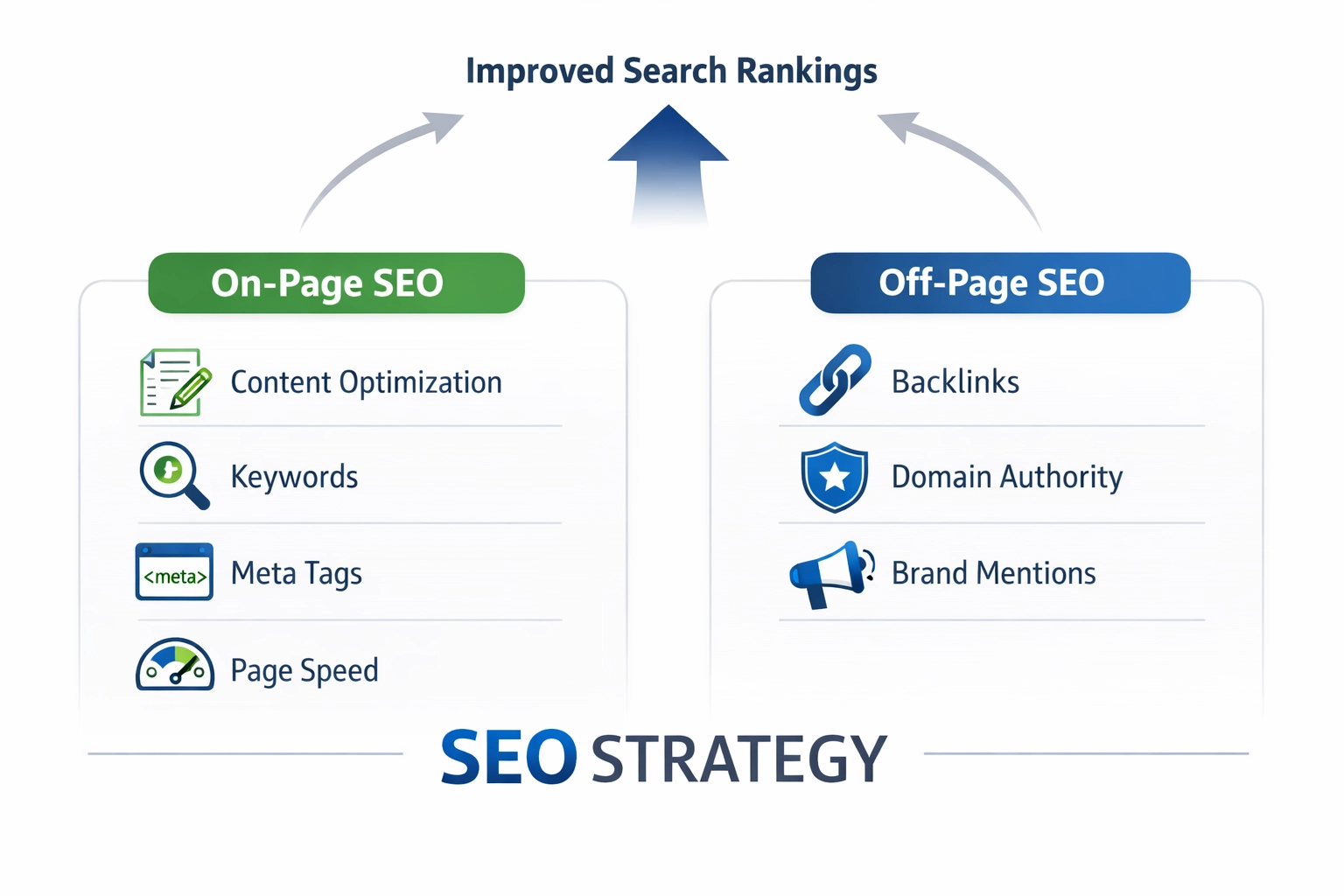
the differences between on-page and off-page SEO. proven strategies for optimizing content, building backlinks, and improving your search rankings with
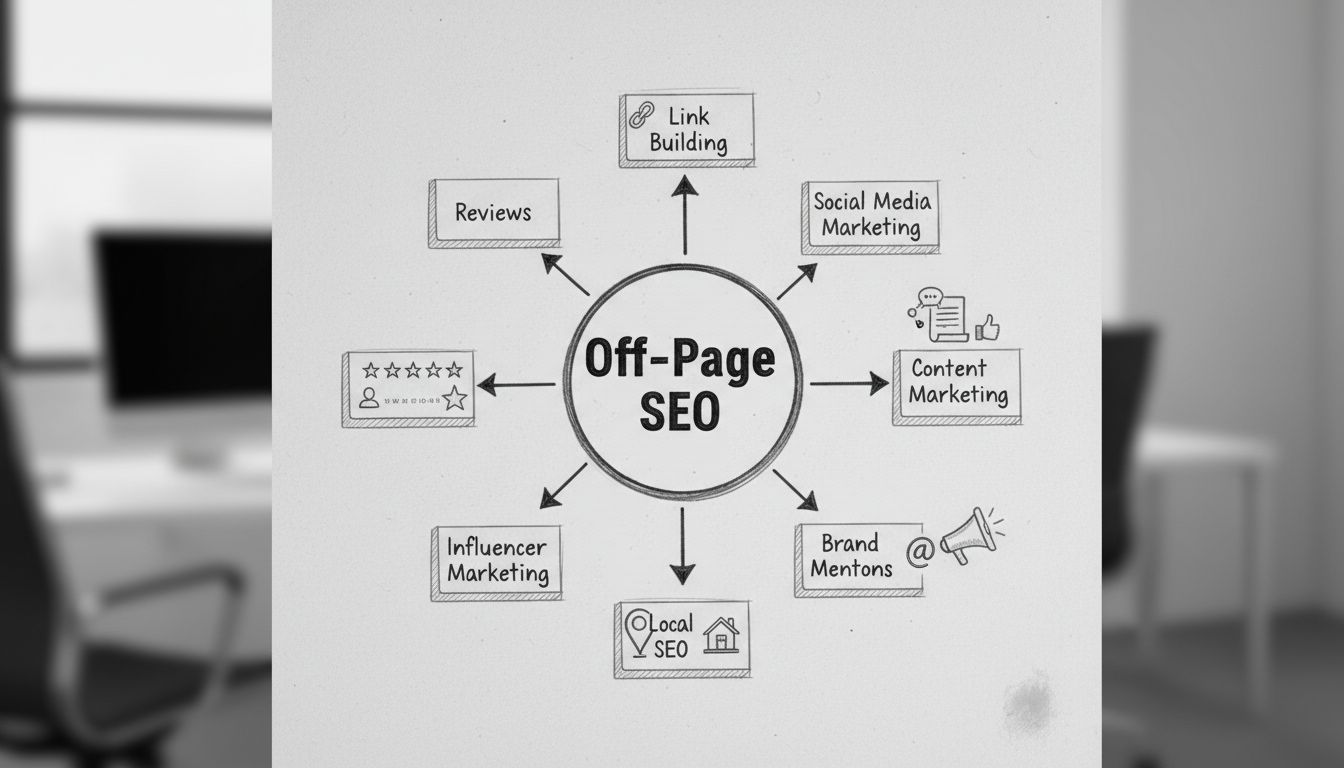
Learn the most effective off-page SEO techniques in 2025. Discover link building, social media strategies, and proven methods to boost your website's authority ...
Join our community of happy clients and provide excellent customer support with Post Affiliate Pro.




Cookie Consent
We use cookies to enhance your browsing experience and analyze our traffic. See our privacy policy.