


How To Create An SEO Affiliate Marketing Strategy
Check out our tips for an effective SEO affiliate marketing and strategy for a deeper understanding of both concepts.
11 min read
SEO
AffiliateMarketing
+3
Organic search traffic → helpful content → affiliate link click → purchase or lead → commission
On this page
The formula is straightforward:
Organic search traffic → helpful content → affiliate link click → purchase or lead → commission
Unlike an advertiser who pays for every click, an SEO affiliate builds content assets that rank in search results and generate revenue long after publication. The marginal cost per visitor is effectively zero once a page ranks.
SEO is the engine that delivers potential buyers to that content without ongoing ad spend. A well-optimized affiliate page can rank for dozens of related keywords, each representing a person actively researching a purchase.
These roles are often confused but fundamentally different:
| Role | Who They Serve | How They Earn | Primary Output |
|---|---|---|---|
| SEO affiliate | Their own audience | Commissions from product sales via affiliate links | Content that ranks and converts |
| SEO consultant | Client businesses | Fees for services (retainer, hourly, project) | Audits, strategy, implementation for clients |
An SEO affiliate owns the asset (the website and its content). An SEO consultant optimizes assets owned by others. The distinction matters because the risk profile, skill requirements, and revenue models are entirely different.

Set up advanced tracking in minutes. No credit card required.
What makes SEO “free” is the absence of a direct cost per visitor. Once a page ranks, 1,000 visitors cost the same as 10,000 visitors: nothing additional. That compounding dynamic is what makes the model economically attractive over the long run.
| Factor | SEO (Organic) | PPC (Paid Ads) |
|---|---|---|
| Cost per click | $0 marginal cost after ranking | $0.50–$5.00+ depending on niche |
| Time to results | 3–12 months | Immediate |
| Sustainability | Traffic continues if you stop working | Traffic stops the moment you stop paying |
| Conversion rate potential | Higher — users trust organic results more | Lower — ad blindness and skepticism |
| Scalability ceiling | Limited by search volume | Limited by budget |
| Skill requirement | Content, technical SEO, link building | Ad copy, bidding strategy, landing page optimization |
| Best for | Long-term income, authority building | Quick testing, product launches, seasonal promotions |
A paid ad campaign produces a linear relationship between spend and traffic. Double your budget, roughly double your clicks. Turn off the budget, traffic goes to zero.
SEO follows a compounding curve. The first few months produce little visible return. But as pages age, accumulate backlinks, and build topical authority, the same article can grow its traffic year over year with no additional investment beyond periodic updates.
Competitor data consistently shows that buyer-intent organic queries convert at 3× to 5× the rate of generic informational queries. SEO affiliates who target commercial and transactional keywords — terms containing “best,” “vs.,” “review,” “buy,” “price,” or “discount” — capture visitors who are closer to a purchase decision.
These align with Google’s E-E-A-T framework (Experience, Expertise, Authoritativeness, Trustworthiness). Affiliates who treat their site as a real publication rather than a link farm are rewarded with stability through algorithm shifts.
Be the first to know about new features and product updates.
Not all niches monetize equally. A blog about abstract poetry will attract readers but few buyers. A site comparing project management software attracts readers who are actively purchasing.
Keyword research for affiliates differs from general SEO research. The goal is to find terms where the searcher is likely to click an affiliate link and buy.
Keyword types to target:
Aim to map 20 to 50 target keywords before writing a single article, organized by topic cluster.
Google ranks pages that best answer the query behind the keyword. An affiliate page that ranks is one where the visitor finds exactly what they expected.
Every piece of content should answer the question the searcher asked — and then answer the next three questions they will have.
On-page optimization ensures search engines understand your content and rank it for the right queries.
Technical SEO ensures search engines can crawl, index, and render your site without issues.
Current best practices for earning links:
How you implement affiliate links affects both user trust and search rankings.
Technical requirements:
Getting traffic is half the battle. Turning visitors into buyers requires deliberate optimization.
Elements that improve affiliate conversion rates:
SEO is not set-and-forget. Rankings decay if content goes stale.
Maintenance cadence for affiliate sites:
The formula is straightforward:
Organic search traffic → helpful content → affiliate link click → purchase or lead → commission
Unlike an advertiser who pays for every click, an SEO affiliate builds content assets that rank in search results and generate revenue long after publication. The marginal cost per visitor is effectively zero once a page ranks.
SEO is the engine that delivers potential buyers to that content without ongoing ad spend. A well-optimized affiliate page can rank for dozens of related keywords, each representing a person actively researching a purchase.
The two disciplines intersect at search intent. SEO affiliates capture that intent, answer the searcher’s questions, and earn commissions when the reader acts.
These roles are often confused but fundamentally different:
| Role | Who They Serve | How They Earn | Primary Output |
|---|---|---|---|
| SEO affiliate | Their own audience | Commissions from product sales via affiliate links | Content that ranks and converts |
| SEO consultant | Client businesses | Fees for services (retainer, hourly, project) | Audits, strategy, implementation for clients |
An SEO affiliate owns the asset (the website and its content). An SEO consultant optimizes assets owned by others. The distinction matters because the risk profile, skill requirements, and revenue models are entirely different.
SEO is often described as “free traffic,” but that framing is incomplete. You do not pay per click the way you would with Google Ads, but you invest significant resources:
What makes SEO “free” is the absence of a direct cost per visitor. Once a page ranks, 1,000 visitors cost the same as 10,000 visitors: nothing additional. That compounding dynamic is what makes the model economically attractive over the long run.
| Factor | SEO (Organic) | PPC (Paid Ads) |
|---|---|---|
| Time to results | 3–12 months | Immediate |
| Sustainability | Traffic continues if you stop working | Traffic stops the moment you stop paying |
| Conversion rate potential | Higher — users trust organic results more | Lower — ad blindness and skepticism |
| Scalability ceiling | Limited by search volume | Limited by budget |
| Skill requirement | Content, technical SEO, link building | Ad copy, bidding strategy, landing page optimization |
| Best for | Long-term income, authority building | Quick testing, product launches, seasonal promotions |
Neither channel is universally superior.
A paid ad campaign produces a linear relationship between spend and traffic. Double your budget, roughly double your clicks. Turn off the budget, traffic goes to zero.
SEO follows a compounding curve. The first few months produce little visible return. But as pages age, accumulate backlinks, and build topical authority, the same article can grow its traffic year over year with no additional investment beyond periodic updates.
That is not an exceptional outcome — it is the expected result for a page ranking in the top three for a commercial-intent keyword with decent search volume.
Organic search visitors convert at a higher rate than most paid traffic sources because they arrive with intent. They are further down the purchase funnel than someone who sees a display ad while reading news.
Competitor data consistently shows that buyer-intent organic queries convert at 3× to 5× the rate of generic informational queries. SEO affiliates who target commercial and transactional keywords — terms containing “best,” “vs.,” “review,” “buy,” “price,” or “discount” — capture visitors who are closer to a purchase decision.
Google releases multiple core updates each year. The ones that survive and recover share common traits:
These align with Google’s E-E-A-T framework (Experience, Expertise, Authoritativeness, Trustworthiness). Affiliates who treat their site as a real publication rather than a link farm are rewarded with stability through algorithm shifts.
Not all niches monetize equally. A blog about abstract poetry will attract readers but few buyers. A site comparing project management software attracts readers who are actively purchasing.
Criteria for a strong affiliate niche:
Keyword research for affiliates differs from general SEO research. The goal is to find terms where the searcher is likely to click an affiliate link and buy.
Keyword types to target:
| Type | Example | Intent Level |
|---|---|---|
| Commercial investigation | “best standing desk converter” | High — comparing before buying |
| Product comparison | “iPhone 17 vs. Samsung Galaxy S26” | High — deciding between options |
| Review | — | Medium-high — validating a choice |
| Informational (top of funnel) | — | Low-medium — awareness building |
| Transactional | “buy Herman Miller Aeron discount” | Very high — ready to purchase |
Aim to map 20 to 50 target keywords before writing a single article, organized by topic cluster.
Google ranks pages that best answer the query behind the keyword. An affiliate page that ranks is one where the visitor finds exactly what they expected.
Every piece of content should answer the question the searcher asked — and then answer the next three questions they will have.
On-page optimization ensures search engines understand your content and rank it for the right queries.
/best-espresso-machines-under-500/ not /category/post-id-12345/.Technical SEO ensures search engines can crawl, index, and render your site without issues.
Google indexes the mobile version of your site. Test every page on a phone screen.
Backlinks remain one of the strongest ranking signals.
Current best practices for earning links:
How you implement affiliate links affects both user trust and search rankings.
Technical requirements:
Use rel="sponsored" on all affiliate links. This tells Google the link is part of a commercial relationship. Google’s official guidance, updated, specifies rel="sponsored" for affiliate and paid links.
Never cloak links in a way that shows different content to users versus search engines. Cloaking violates Google’s spam policies.
Use a link management plugin or tool (Pretty Links, ThirstyAffiliates, or a custom redirect system) to keep affiliate URLs clean and manageable.
Place affiliate links where they are contextually relevant, not stuffed into every paragraph.
Include a clear affiliate disclosure near the top of every page containing affiliate links.
Example disclosure: “This article contains affiliate links. If you buy through these links, I may earn a commission at no extra cost to you. Here’s how we rate and review products.”
Getting traffic is half the battle. Turning visitors into buyers requires deliberate optimization.
Elements that improve affiliate conversion rates:
SEO is not set-and-forget. Rankings decay if content goes stale.
Maintenance cadence for affiliate sites:
Google’s “freshness” algorithm favors content that is demonstrably current.
SEO affiliates build their business around content formats that align with how people search when they are close to buying.
A product review from an SEO affiliate goes beyond the manufacturer’s spec sheet. It includes:
Comparison posts (“Product A vs. Product B”) are especially valuable because the searcher is actively deciding between options. A well-structured comparison with a summary table, detailed breakdowns, and a clear verdict for different use cases can capture traffic from both product names plus the “vs.” modifier.
Roundup posts aggregate multiple products into a ranked list with clear selection criteria. These pages target high-volume commercial keywords and can earn commissions across every product listed.
A strong roundup post includes:
Informational content builds topical authority and captures top-of-funnel traffic that can be guided toward affiliate products. A tutorial on “how to set up a home espresso bar” naturally leads to recommending specific machines, grinders, and accessories — each an affiliate opportunity.
This content also attracts backlinks from other sites referencing the tutorial, strengthening domain authority across the entire site.
Affiliate links are not inherently harmful to SEO. Google explicitly permits affiliate sites — but with a critical condition: the site must provide substantial added value beyond what the merchant’s own product page offers.
The distinction: Google penalizes low-value affiliate content, not affiliate links themselves.
Every affiliate link should carry the rel="sponsored" attribute. This tells Google the link is part of a commercial arrangement and prevents it from passing PageRank in a way that could be interpreted as a paid link scheme.
The SEO affiliate model involves three distinct stakeholder groups, each with different goals and workflows.
The publisher owns the website and creates content. Their workflow:
Limitations for publishers: SEO is a long game. It requires patience through the 3–12 month ranking lag. Algorithm updates can disrupt traffic overnight. Dependence on a single affiliate program or traffic source creates concentration risk.
The advertiser sells the product and runs the affiliate program. Their workflow for leveraging SEO affiliates:
Limitations for advertisers: You have limited control over how affiliates represent your brand in search results. An affiliate’s page may outrank your own product page for your brand name plus “review,” shaping first impressions you do not fully control.
Program managers sit between advertisers and publishers. Their workflow:
Limitations for program managers: SEO affiliates require a longer evaluation window. Judging an SEO affiliate by month-one performance misses the compounding nature of their traffic. Program managers who optimize exclusively for immediate conversions will undervalue their strongest long-term partners.
SEO evolves. Tactics that worked five or ten years ago now trigger penalties or produce no results.
| Obsolete Practice | Why It Fails in 2026 |
|---|---|
| Keyword stuffing | Google’s natural language processing detects unnatural repetition. Pages are demoted or deindexed. |
| Private blog networks (PBNs) | Google actively identifies and devalues PBN link patterns. Sites using PBNs risk manual action. |
| Thin affiliate content | Pages that republish merchant descriptions without original value are classified as spam. |
| Exact-match domains | A domain like best-espresso-machines.com no longer confers a ranking advantage and can signal low quality. |
| Article spinning | AI-detection and duplicate-content filters make spun content ineffective and risky. |
| Mass directory submissions | Low-quality directory links are ignored at best, penalized at worst. |
| Comment spam for backlinks | All major platforms use rel="nofollow" on comment links. No SEO value, high spam signal. |
| Clickbait titles that do not match content | Google measures user satisfaction signals (pogo-sticking, dwell time). Mismatched titles lead to poor engagement and ranking drops. |
| Current Best Practice | Why It Works in 2026 |
|---|---|
| Demonstrated first-hand experience | Google’s E-E-A-T guidelines explicitly reward content from authors who have used the product. Original photos, test data, and personal observations are strong signals. |
| Topical authority | Covering a subject comprehensively — not just affiliate content but informational guides, glossaries, and tutorials — signals genuine expertise. |
| Helpful content that answers the next question | Content that fully satisfies the searcher’s query and anticipates follow-up questions earns longer dwell time and better engagement metrics. |
| Earned editorial backlinks | Links from respected publications, earned through quality content and outreach, remain one of the strongest ranking factors. |
| Regular content refreshes | Updating articles with current information, new products, and fresh data signals relevance to Google’s freshness algorithm. |
| Structured data (schema markup) | Article, Review, Product, and FAQ schema help search engines understand content and can earn rich results in the SERP. |
| Mobile-first, fast-loading pages | Core Web Vitals are direct ranking factors. Pages that load quickly and render cleanly on mobile devices rank higher. |
| Genuine audience building | Email lists, social followings, and brand searches signal to Google that the site is a real entity people seek out, not just an SEO play. |
Yes, a beginner can learn and execute SEO for affiliate marketing. But realistic expectations prevent early abandonment.
Typical timeline for a new affiliate site:
| Phase | Timeframe | What to Expect |
|---|---|---|
| Setup and learning | Month 1–2 | Domain, hosting, CMS setup, niche research, learning SEO fundamentals |
| Content production | Month 2–6 | Publishing 20–40 articles targeting low-competition keywords |
| First rankings | Month 3–6 | Pages begin appearing on pages 2–5 of Google for target keywords |
| First commissions | Month 4–8 | As pages reach page one, traffic converts to commissions |
| Compounding growth | Month 6–18+ | Older content accumulates backlinks and authority; traffic grows non-linearly |
| Meaningful income | Month 12–24 | — |
The most common failure point is quitting during months 3–6, when the work is done but rankings have not yet materialized.
A beginner can start with minimal investment:
The barrier to entry is low. The barrier to sustained success is patience and consistency.
Look at the question the searcher is trying to answer and the pages that already satisfy it. Prefer a topic where the publisher can add a useful explanation, original comparison or supported product assessment. A long-tail phrase can be more specific, but lower competition does not automatically mean valuable traffic.
Plan on-page structure, relevant internal links and technical accessibility together. Earn references by publishing material worth citing. Do not substitute keyword repetition or purchased links for evidence and clear information.
Enhance your affiliate strategy by leveraging expert SEO techniques. Discover how SEO affiliates can boost your site’s visibility and drive sustainable revenue.
Check out our tips for an effective SEO affiliate marketing and strategy for a deeper understanding of both concepts.

Learn how to leverage SEO affiliate marketing to grow your business, save time and money, and reach new prospects. Discover proven strategies with PostAffiliate...
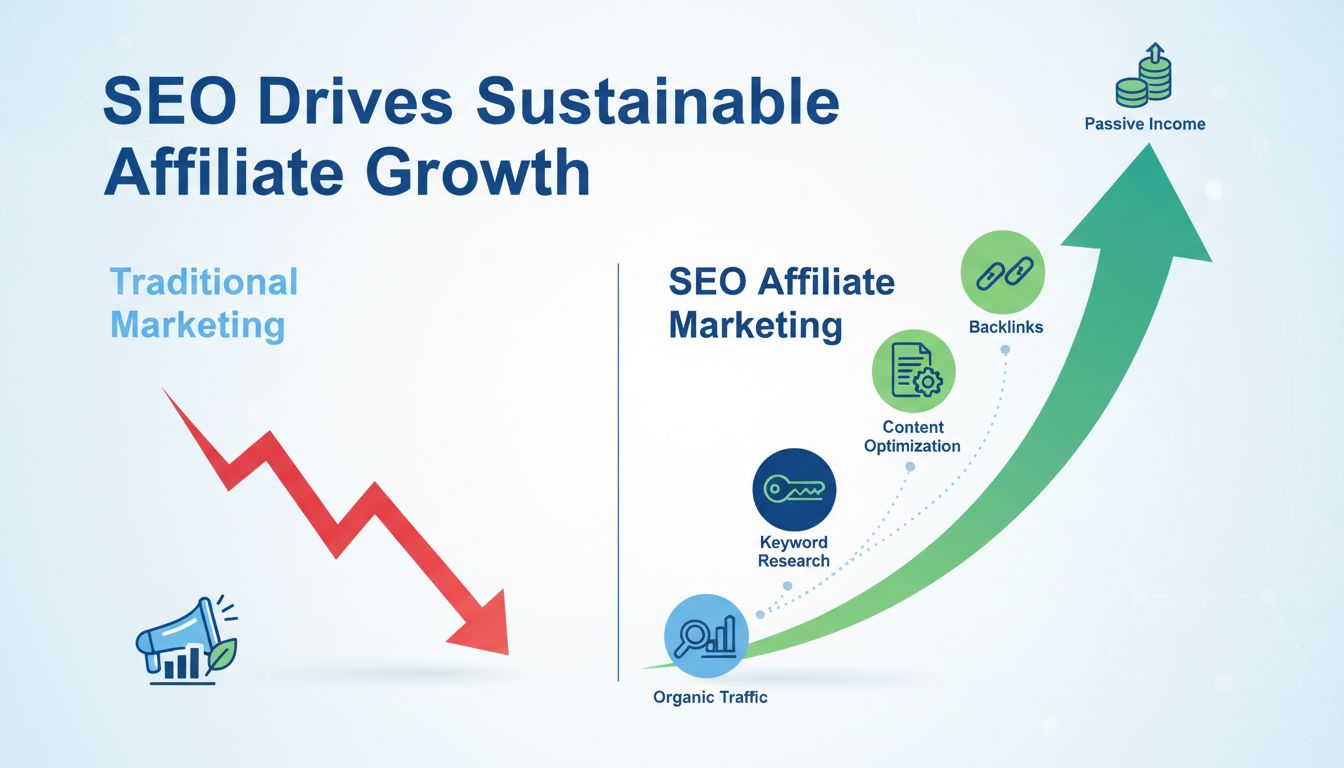
Learn why SEO is crucial for affiliate marketing success. Discover how organic traffic, keyword optimization, and content strategy drive sustainable commissions...
Join our community of happy clients and provide excellent customer support with Post Affiliate Pro.



Cookie Consent
We use cookies to enhance your browsing experience and analyze our traffic. See our privacy policy.