


How Do SERPs Work? Complete Guide to Search Engine Results Pages
Learn how SERPs work, including ranking factors, search algorithms, and how to optimize your affiliate website for better visibility in search results.
8 min read
A search engine results page (SERP) is the page a search engine displays after a user submits a query.
A search engine results page (SERP) is the page a search engine displays after a user submits a query. When someone types “best running shoes” into Google or “how to bake sourdough” into Bing, the page that loads — with its mix of links, images, ads, and answer boxes — is the SERP. It is the single most important interface between a business and its potential customers online.
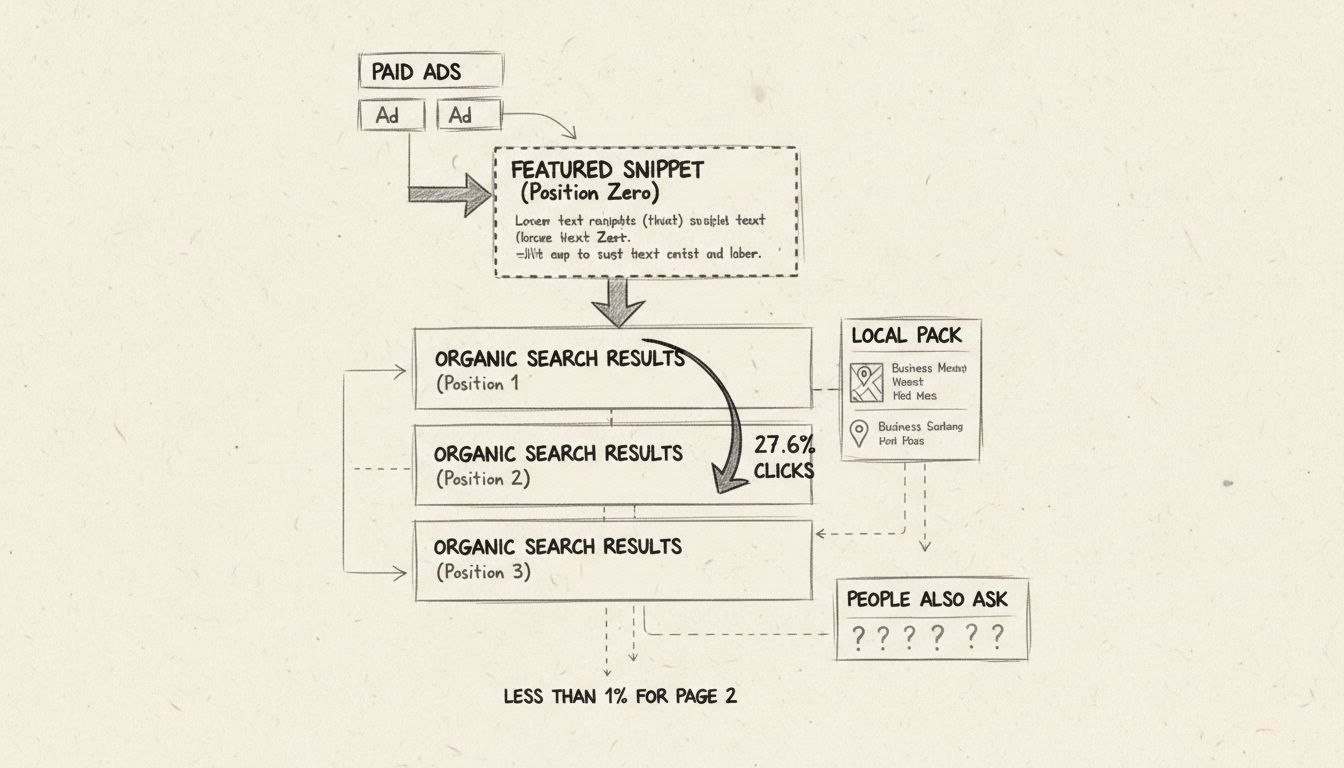
Modern SERPs are not simple ranked lists. They are dynamic, personalized interfaces that combine organic listings, paid advertisements, AI-generated summaries, knowledge panels, local maps, video carousels, and interactive question boxes. Which features appear depends on the query itself, the user’s device, their location, their search history, and the time of day.
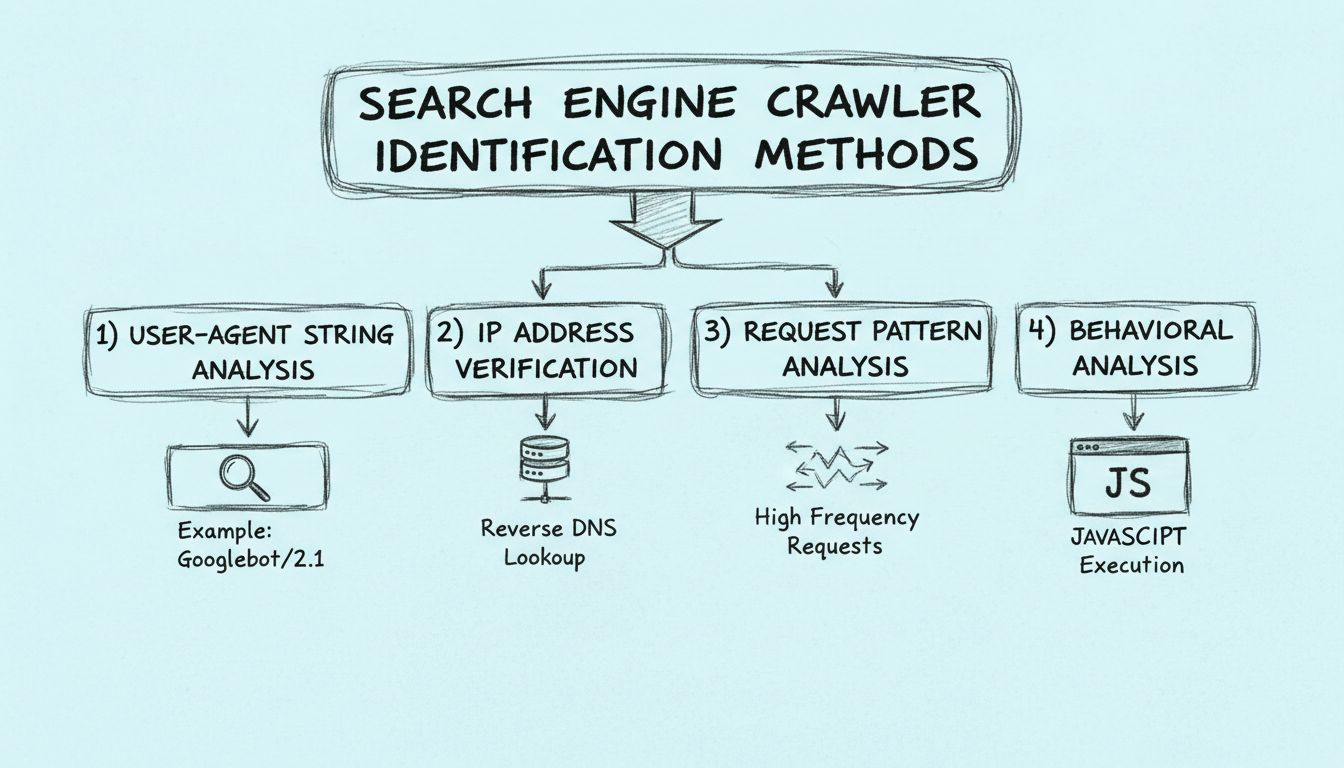
When a user enters a query, the search engine does not scan the live web. It searches its pre-built index — a massive database of pages it has already crawled and stored. Algorithms then rank those pages in real time based on hundreds of signals, and the engine assembles a results page tailored to that specific query and user.
The process behind every SERP follows three stages:
Google’s ranking systems weigh factors that include keyword relevance, content depth, backlink authority, page speed, mobile-friendliness, and — increasingly — signals of experience and trustworthiness. The exact formula is proprietary and changes frequently. Google confirmed over 5,000 algorithm updates alone.
No two users see identical SERPs. Search engines adjust results based on:
This personalization means that checking your own ranking from one browser or location gives only a partial picture. Tracking tools that simulate searches from multiple locations provide more reliable data.

Set up advanced tracking in minutes. No credit card required.
A modern SERP can surface over a dozen distinct feature types. Each competes for user attention and clicks differently.
| Feature | What It Is | Marketing Implication |
|---|---|---|
| Organic results | Unpaid, text-based listings ranked by relevance | — |
| Paid ads | Sponsored listings marked “Ad” or “Sponsored” | Appear above organic results; advertisers bid on keywords and pay per click |
| AI Overviews | AI-generated summaries with source links, shown on informational queries | Can answer queries directly on the SERP, reducing clicks to traditional listings |
| Featured snippets | Boxed excerpts pulled from a webpage, shown above organic results | High visibility; often called “position zero” |
| People Also Ask | Expandable question-and-answer boxes | Reveals related queries users actually search; valuable for content planning |
| Knowledge panels | Information cards about entities (companies, people, places) | Pulled from Google’s Knowledge Graph and structured data on authoritative sites |
| Local pack | Map with three local business listings | Critical for location-based queries; requires local SEO and accurate business profiles |
| Image results | Thumbnail grid of images relevant to the query | Drives traffic for visual and product searches |
| Video results | Carousel of video thumbnails, often from YouTube | Dominates how-to and tutorial queries |
| Shopping results | Product listings with images, prices, and merchant names | Key for ecommerce and product-comparison queries |
| Rich results | Enhanced organic listings with stars, prices, or other structured data | Improves click-through rate by making listings stand out |
AI Overviews change the click dynamic. When the answer appears directly on the SERP, users may never click through to a website. For publishers and affiliate marketers, this means content must go beyond answering simple factual questions. It must offer analysis, original data, comparison tables, and hands-on guidance that an AI summary cannot fully replicate.
Understanding the difference between organic and paid results is essential for any marketer allocating budget across channels.
Organic results are the unpaid listings that appear because the search engine’s algorithm determined they are relevant and authoritative. They typically display as a clickable title, a URL, and a descriptive snippet. The snippet may come from the page’s meta description or from on-page text the engine considers most relevant to the query.
Organic rankings are earned through SEO: creating quality content, earning backlinks, optimizing technical performance, and building topical authority. They compound over time. A page that ranks well can continue to drive traffic for months or years without incremental cost.
Paid results are advertisements. Advertisers bid on keywords through platforms like Google Ads, and their listings appear above or below organic results with a “Sponsored” label. The advertiser pays each time someone clicks — a model called pay-per-click (PPC).
Paid search delivers immediate visibility. It is especially useful for:
The trade-off is cost. Once the budget stops, the traffic stops. Organic SEO, by contrast, builds a lasting asset.
Most affiliate programs and publishers benefit from a mix. Organic content — reviews, comparisons, tutorials — builds sustainable traffic. Paid search can amplify high-converting pages during peak buying seasons or test which keywords convert before investing in long-form content. Affiliate program managers should understand both channels because their publishers may use either or both to drive referral traffic.
Be the first to know about new features and product updates.
The relationship between SERP and SEO is straightforward but often confused.
SEO is the work. The SERP is where that work pays off — or doesn’t. Every SEO tactic, from keyword research to link building to technical optimization, aims at one outcome: higher visibility on the SERP for queries that matter to the business.
Affiliate marketing depends on traffic. Whether an affiliate publisher runs a comparison blog, a coupon site, or a review channel, nearly all of their visitors arrive through a search engine at some point in the customer journey. The SERP is the gatekeeper.
When your affiliates rank well on relevant SERPs, your products gain exposure without incremental ad spend. But SERP dynamics directly affect program performance:
Practical workflow for program managers:
The SERP is your brief. Before writing any affiliate content, search your target query and study what ranks:
Example workflow for an affiliate publisher:
SERP strategy has limits. Ranking takes time — often six to twelve months for competitive queries. Algorithm updates can shift rankings overnight. AI Overviews and other features that keep users on the SERP reduce the total click pool. And personalization means no two users see identical results, making rank-tracking an approximation, not a precise science.
Affiliate marketers who treat the SERP as a static target will be frustrated. Those who monitor it continuously and adapt their content strategy to its evolution build durable traffic.
Ranking higher requires coordinated effort across content, technical SEO, and authority building. There is no single trick, but there is a proven framework.
Before writing, determine what the SERP already rewards for your query. If the top results are step-by-step tutorials, write a step-by-step tutorial — not a product page. If they are comparison tables, build a comparison table. Google’s algorithms have learned what satisfies users for each query type, and pages that align with that intent consistently outrank those that do not.
Analyze the top three results for your target query. Identify what they cover well and — critically — what they miss. Your content should include everything they cover, plus original data, expert insights, updated figures, or practical examples they lack. A page that is 20% more comprehensive than the current top result has a measurable ranking advantage.
Pages must load quickly, render correctly on mobile devices, and be crawlable by search engine bots. Core Web Vitals — Google’s set of page-experience metrics — are a confirmed ranking factor. Use Google Search Console to identify and fix crawl errors, slow pages, and mobile-usability issues.
Links from reputable, topically relevant websites remain one of the strongest ranking signals. Build them through original research, guest contributions, digital PR, and creating content that other sites want to reference. Avoid link schemes and purchased links, which can trigger manual penalties.
Schema markup helps search engines understand your content and can qualify your pages for rich results — review stars, product prices, FAQ accordions, and more. Rich results improve click-through rate even if they do not directly boost ranking position. Implement Article, FAQ, Review, and Product schema as applicable.
Google favors fresh content, especially for topics where information changes. Update key pages at least annually: refresh statistics, replace outdated examples, add new sections addressing emerging questions, and republish with the current year visible in the content.
You cannot improve what you do not measure. SERP tracking gives you the feedback loop needed to evaluate SEO efforts.
Set a monthly review cadence. SERP landscapes shift continuously; quarterly or annual checks miss the signal.
| Search Engine | Key SERP Differences |
|---|---|
| Most feature-rich; AI Overviews, knowledge panels, local packs, shopping, and extensive personalization | |
| Bing | Similar feature set; powers Copilot and ChatGPT’s browsing capabilities; often shows more image and video results |
| Yahoo | Powered by Bing’s index; SERP layout is simpler with fewer rich features |
| DuckDuckGo | Minimal personalization; no user tracking; fewer SERP features; emphasizes privacy |
| Brave Search | Independent index; growing AI-summarization features; privacy-focused |
For affiliate marketers, Google is the primary battleground.
Unlock the power of SERP insights and maximize your affiliate marketing results. Leverage advanced tools to improve your rankings and grow your business.
Learn how SERPs work, including ranking factors, search algorithms, and how to optimize your affiliate website for better visibility in search results.
Discover why SERP (Search Engine Results Pages) are critical for online visibility, traffic generation, and business growth. Learn how to optimize for better ra...
A search engine is software created to make searching on the internet easier for users. It searches millions of pages and provides the most relevant results.
Join our community of happy clients and provide excellent customer support with Post Affiliate Pro.




Cookie Consent
We use cookies to enhance your browsing experience and analyze our traffic. See our privacy policy.