


How Do Single Offers Work in Affiliate Marketing?
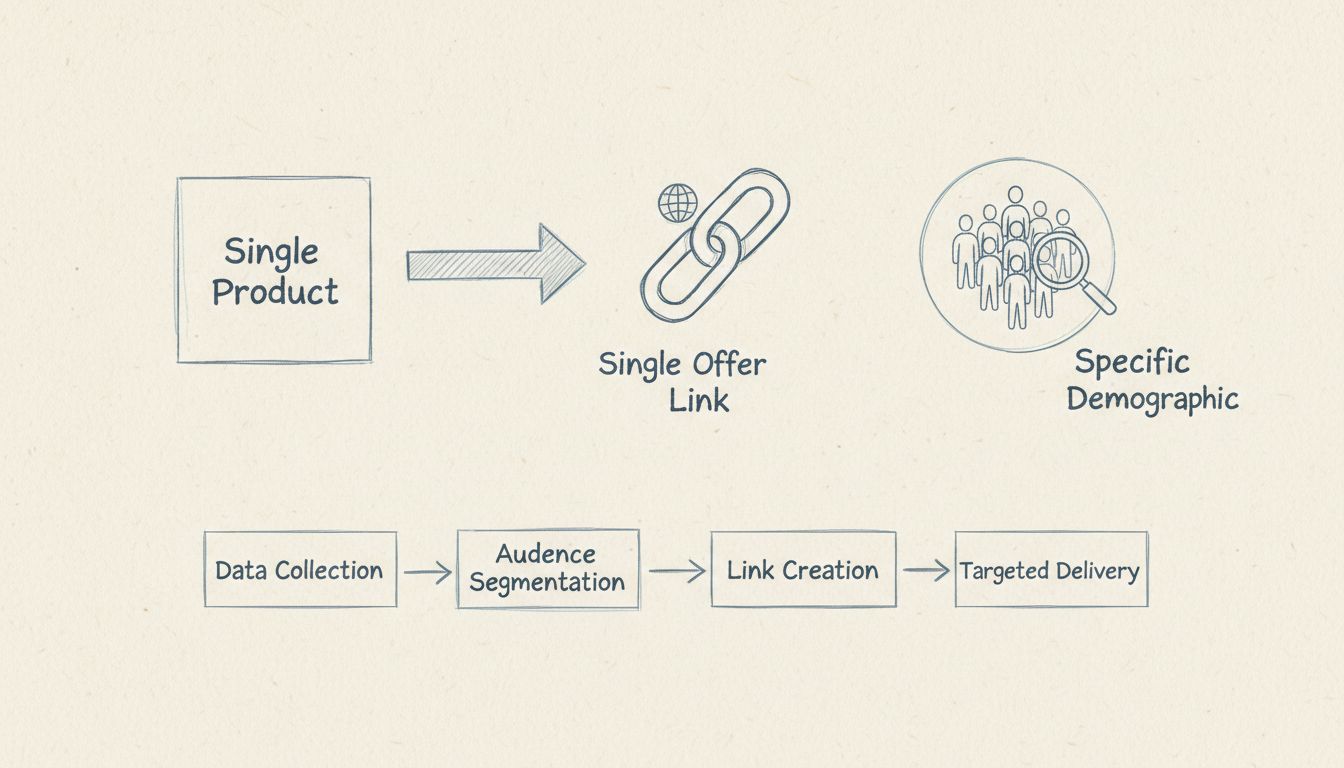
Learn how single offers work in affiliate marketing. Discover how targeted links drive higher conversions by presenting specific products to defined demographic...
8 min read
Every click goes to one destination.
Every click goes to one destination. One product, one landing page, one payout. That is the single offer — the simplest, most controllable, and often most profitable unit in affiliate marketing. Yet the term gets confused with “offer,” “smartlink,” and even “single-level affiliate program.” This article untangles each distinction and explains what a single offer really is, how it works, when it outperforms every alternative, and why it matters to affiliates, program managers, and advertisers alike.
A single offer is an affiliate campaign that sends every click to one specific advertiser, one landing page, one conversion goal, and one payout structure — with no rotation, no fallback, and no automated routing to alternative destinations.
In practice, it looks like this: you run a Facebook ad, a reader clicks your affiliate link, and everyone lands on the same product page. If the required action happens — a sale, a signup, a deposit — you earn the stated commission. That is a single-offer campaign.
In affiliate marketing, an “offer” is the broad unit: a merchant’s proposal to affiliates to promote something for a commission. But a single offer narrows that scope. One advertiser can run four separate single offers for the same physical product — each with a different landing page, price point, GEO target, and commission — because the funnel and terms define the offer, not the product alone.
These terms sound similar but describe entirely different things:
You can promote a single offer inside a single-level program. You can also promote a single offer inside a multi-level program. The concepts operate at different layers.
A single offer is an affiliate campaign that sends every click to one specific advertiser, one landing page, one conversion goal, and one payout structure — with no rotation, no fallback, and no automated routing to alternative destinations.
In practice, it looks like this: you run a Facebook ad, a reader clicks your affiliate link, and everyone lands on the same product page. If the required action happens — a sale, a signup, a deposit — you earn the stated commission. That is a single-offer campaign.
The reason is straightforward: when creative, prelander, and tracking are tuned as one tight funnel, conversion rates become predictable and scalable.
In affiliate marketing, an “offer” is the broad unit: a merchant’s proposal to affiliates to promote something for a commission. But a single offer narrows that scope. One advertiser can run four separate single offers for the same physical product — each with a different landing page, price point, GEO target, and commission — because the funnel and terms define the offer, not the product alone.
These terms sound similar but describe entirely different things:
You can promote a single offer inside a single-level program. You can also promote a single offer inside a multi-level program. The concepts operate at different layers.

Set up advanced tracking in minutes. No credit card required.
Every single offer listed in a network dashboard — whether on Awin, ClickBank, or an in-house platform — contains the same core fields. Understanding each one is what separates profitable campaigns from expensive mistakes.
The company behind the offer and the specific product or service being promoted. This could be a SaaS subscription, an insurance quote flow, a physical supplement, or a mobile app install. The advertiser sets the terms; the affiliate drives the traffic.
The action that triggers a payout. Common conversion events include:
The conversion flow also specifies whether the action is SOI (single opt-in — one form field submitted) or DOI (double opt-in — email confirmation required). SOI converts more easily; DOI delivers higher-quality leads and is preferred by advertisers in finance and insurance verticals.
The commission model and amount. Typical structures:
| Model | How It Pays | Typical Range (US, 2026) |
|---|---|---|
| CPA (Cost Per Action) | Fixed amount per conversion | — |
| CPL (Cost Per Lead) | Fixed amount per lead | — |
| CPS (Cost Per Sale) | Percentage of sale value | — |
| RevShare (Revenue Share) | Recurring percentage of customer LTV | — |
RevShare offers have grown in SaaS and subscription verticals, where lifetime value makes recurring commissions attractive.
The landing page is the destination — the page the consumer sees after clicking the affiliate link. The tracking link is the unique URL that identifies which affiliate sent the click. When a conversion fires, the tracking platform attributes it to the correct affiliate using that link’s embedded ID.
A single offer typically provides one tracking link. Some networks also supply optional prelander pages — a lightweight page between the ad and the merchant’s landing page that warms up the visitor.
Most single offers specify allowed countries (GEOs) and permitted traffic channels. A typical listing reads: “US only — Facebook, Google Search, native ads allowed. No email, no incentive, no brand bidding.”
Violating these restrictions can void conversions retroactively. Reading the full terms — not just the payout — is the single most important habit for any affiliate running single offers.
| Field | What It Tells You | Why It Matters |
|---|---|---|
| Conversion Event | Sale, lead, install, trial, deposit | Determines your funnel design |
| Payout & Model | CPA, CPL, CPS %, RevShare | Directly affects ROI calculations |
| GEOs | Allowed countries; per-GEO payouts if different | Mismatched GEO = wasted spend |
| Flow | SOI, DOI, CC-submit, trial | Affects conversion rate and lead quality |
| Allowed Traffic | Facebook, Google, native, email, push | Violations void conversions |
| Cap | Daily or monthly limit on paid conversions | A capped offer can stop earning mid-campaign |
| Hold Period | Days before commission is approved | Affects cash flow timing |
| Creatives Provided | Banners, pre-landers, email swipes | Reduces your production cost |
A smartlink routes each click through a decision engine that evaluates 40 to 120 candidate offers in real time and picks the best match based on GEO, device, OS, and historical conversion data. A single offer commits the entire campaign to one destination — no decision engine, no rotation.
Single offers win when click intent is high and creative-to-offer alignment is tight.
The reason is intuitive: when you control every element of the funnel — the ad creative, the prelander messaging, and the landing page — you can optimize each step for one specific conversion event. Smartlinks, by design, must serve many possible destinations, which dilutes that optimization.
| Factor | Single Offer | Smartlink |
|---|---|---|
| Offers per click | 1 | 40–120 |
| EPC variance | Low (predictable) | High (variable) |
| Optimization depth | Deep (full funnel control) | Shallow (algorithm-driven) |
| Concentration risk | High — paused offer = zero revenue | Low — one paused offer barely dents revenue |
| Best for | Proven creative-offer fit, tier-1 GEOs | Broad testing, mixed-quality traffic, multi-GEO |
| Routing Type | Offers per Click | Best For | Typical EPC Variance |
|---|---|---|---|
| Single offer | 1 | Proven creative-offer fit | Low |
| Smartlink | 40–120 | Mixed-quality traffic, broad testing | High |
| Rotator | 2–8 | A/B testing offers | Medium |
Be the first to know about new features and product updates.
Single offers give affiliates maximum control. You know exactly what you are promoting, to whom, and for how much. This clarity lets you:
The tradeoff is effort. Single offers reward affiliates who invest in creative production and funnel optimization. They punish those who want to set and forget.
From the program side, single offers simplify attribution and partner management:
Program managers running single-offer structures also report fewer compliance issues, since creative and messaging can be reviewed against one specific landing page rather than a rotating pool.
Advertisers benefit from single offers when they want:
A supplement brand, for example, might run three separate single offers for the same bottle: one targeting US Facebook traffic at $45 CPA, one targeting Canadian Google Search at $55 CPA, and one for email-only affiliates at $35 CPA. Each offer is optimized independently; each attracts a different type of affiliate.
Not every single offer is worth promoting. Evaluate these factors before committing budget:
A single-offer funnel has three or four stages:
Ad Creative → Prelander (optional) → Tracking Link → Landing Page
Single offers perform best on traffic sources where you can target specific audiences and control creative:
Once the campaign is live, monitor these metrics:
A single offer puts all revenue eggs in one basket. If the advertiser pauses the offer, reduces the payout, hits its cap, or blocks your traffic source, your campaign stops earning immediately. Smartlinks and rotators spread this risk across multiple advertisers.
Mitigation: run at least two to three single offers across different advertisers or verticals so no single pause wipes out your income.
This is one of the most common questions from new affiliates, and the answer depends on the offer’s cookie duration and conversion flow.
Skip single offers when:
Discover how single offers can drive more targeted traffic and increase your affiliate earnings. Learn to leverage affiliate software for effective campaign management.
Learn how single offers work in affiliate marketing. Discover how targeted links drive higher conversions by presenting specific products to defined demographic...
Discover why single offers are ideal for beginners in affiliate marketing. Learn how to start with single-offer programs, track results, and build a profitable ...
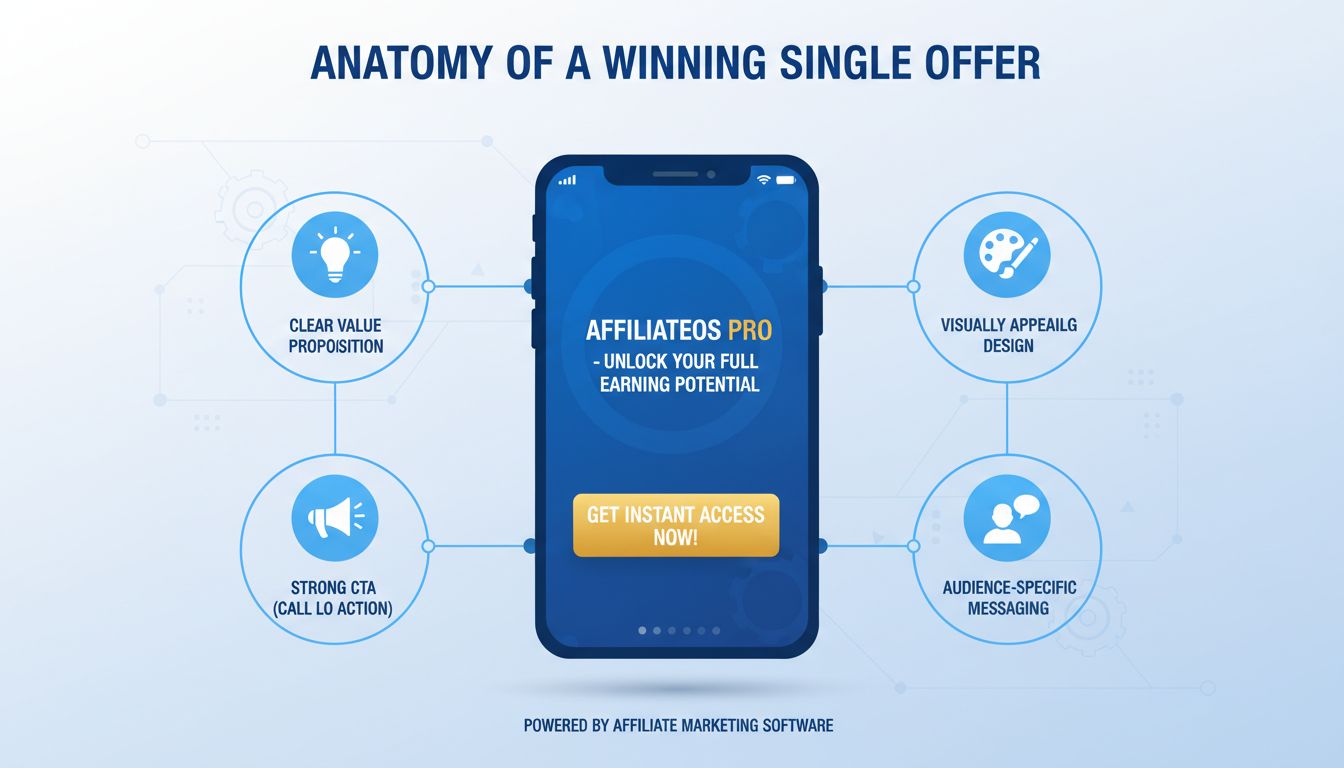
Learn what makes a single offer effective in affiliate marketing. Discover key components including value communication, visual appeal, CTAs, and audience targe...
Join our community of happy clients and provide excellent customer support with Post Affiliate Pro.




Cookie Consent
We use cookies to enhance your browsing experience and analyze our traffic. See our privacy policy.