


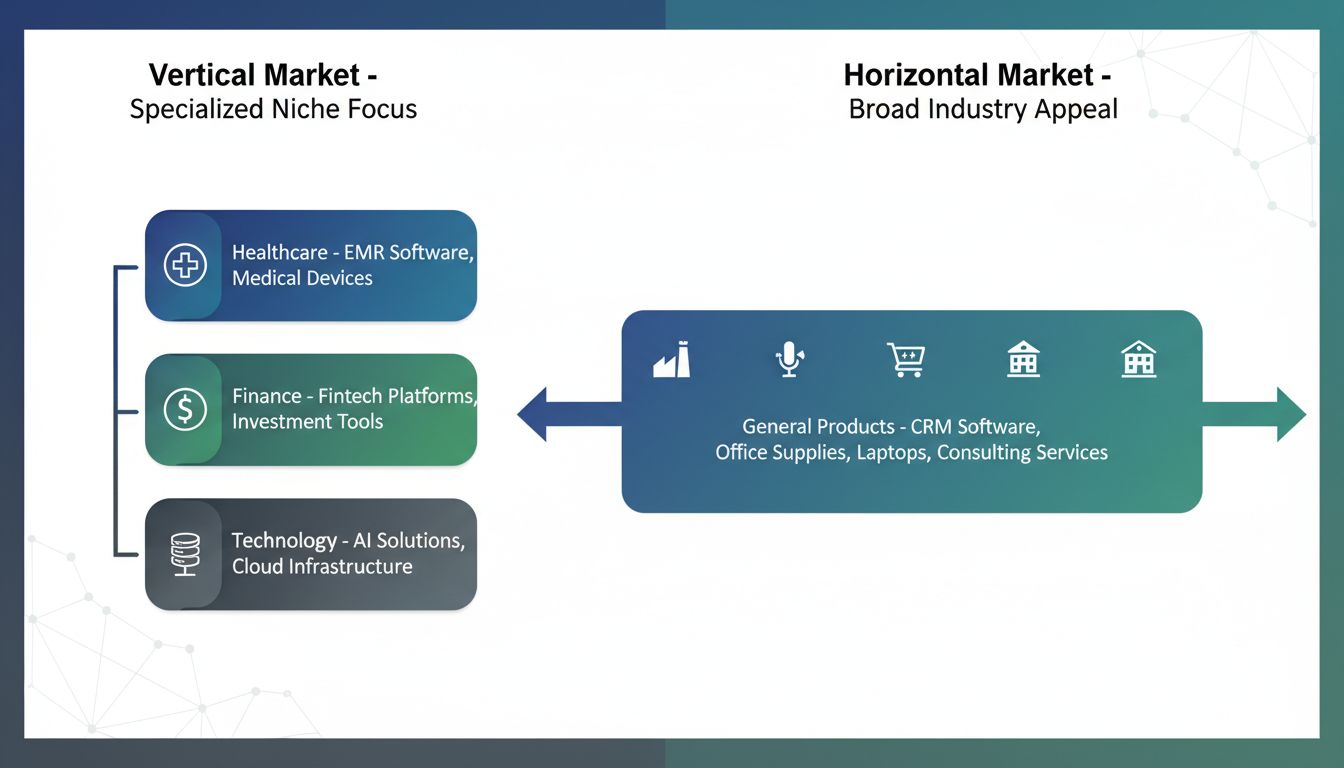
What Does Verticals Mean in Business and Marketing?
Learn what verticals mean in business and marketing. Understand vertical vs horizontal markets, benefits of specialization, and how to choose your market niche.
10 min read
A vertical in affiliate marketing is a specific industry category or market segment within which an affiliate promotes products or services.
On this page
A vertical in affiliate marketing is a specific industry category or market segment within which an affiliate promotes products or services. It groups together offers that share a common subject matter, target audience, and set of advertising platforms.
Think of it as the top-level classification. When an affiliate says “I run finance,” they are naming their vertical. Everything downstream — the specific loan product, the traffic source, the creative angle — flows from that choice.
The term comes from the broader business concept of a vertical market, where a company serves the needs of one particular industry rather than selling broadly across all industries (a horizontal market). In affiliate marketing, the same logic applies: specializing in one vertical lets you develop deep audience knowledge, refine your creatives, and build relationships with the networks that serve that space.
These three terms are often used interchangeably, but they describe different levels of specificity. The hierarchy looks like this:
| Level | Term | Example | What It Means |
|---|---|---|---|
| 1 | Vertical | Finance | The broad industry category |
| 2 | Niche (Sub-Vertical) | Personal Loans | A focused segment within the vertical |
| 3 | Offer | XYZ Lender — $50 per funded lead | The specific product and payout you promote |

Set up advanced tracking in minutes. No credit card required.
| Vertical | Best-Performing Traffic Sources | Notes |
|---|---|---|
| Health & Beauty (Nutra) | Native ads, Facebook, TikTok, push notifications | Visual platforms excel; native ads drive strong conversion for supplements and skincare |
| Finance & FinTech | Native ads, Google Search, email, YouTube | High-intent audiences; search traffic converts well for loans and credit cards |
| eCommerce | Social media (Instagram, TikTok, Pinterest), Google Shopping | Visual-first; influencer partnerships amplify reach |
| iGaming & Gambling | Native ads, push notifications, direct media buys | Major platforms restrict gambling ads; affiliates rely on alternative networks |
| Dating | Social media, push notifications, native ads | Mainstream dating works on social; adult dating relies on push and specialized networks |
| Software & SaaS (AI Tools, VPNs) | Google Search, YouTube, tech blogs, comparison sites | Search intent is key; review and comparison content converts well |
| Utility Apps | Push notifications, mobile ad networks, teasers/banners | Low-cost traffic; push notifications can mimic system alerts effectively |
| Travel | Google Search, social media, email | Seasonal demand; strong visual content and deal-focused messaging |
A vertical in affiliate marketing is a specific industry category or market segment within which an affiliate promotes products or services. It groups together offers that share a common subject matter, target audience, and set of advertising platforms.
Think of it as the top-level classification. When an affiliate says “I run finance,” they are naming their vertical. Everything downstream — the specific loan product, the traffic source, the creative angle — flows from that choice.
The term comes from the broader business concept of a vertical market, where a company serves the needs of one particular industry rather than selling broadly across all industries (a horizontal market). In affiliate marketing, the same logic applies: specializing in one vertical lets you develop deep audience knowledge, refine your creatives, and build relationships with the networks that serve that space.
These three terms are often used interchangeably, but they describe different levels of specificity. The hierarchy looks like this:
| Level | Term | Example | What It Means |
|---|---|---|---|
| 1 | Vertical | Finance | The broad industry category |
| 2 | Niche (Sub-Vertical) | Personal Loans | A focused segment within the vertical |
| 3 | Offer | — | The specific product and payout you promote |
A vertical contains many niches, and each niche contains many offers. Confusing them leads to poor targeting. If you say “I’m in the finance vertical,” an affiliate network manager knows you might want loan offers, credit card offers, insurance offers, crypto offers, or investment-platform offers. If you say “I run personal loans,” they know exactly which offers to send you.
The vertical you choose dictates nearly every operational decision downstream:
Not every traffic source works for every vertical.
| Vertical | Best-Performing Traffic Sources | Notes |
|---|---|---|
| Health & Beauty (Nutra) | Native ads, Facebook, TikTok, push notifications | Visual platforms excel; native ads drive strong conversion for supplements and skincare |
| Finance & FinTech | Native ads, Google Search, email, YouTube | High-intent audiences; search traffic converts well for loans and credit cards |
| eCommerce | Social media (Instagram, TikTok, Pinterest), Google Shopping | Visual-first; influencer partnerships amplify reach |
| iGaming & Gambling | Native ads, push notifications, direct media buys | Major platforms restrict gambling ads; affiliates rely on alternative networks |
| Dating | Social media, push notifications, native ads | Mainstream dating works on social; adult dating relies on push and specialized networks |
| Software & SaaS (AI Tools, VPNs) | Google Search, YouTube, tech blogs, comparison sites | Search intent is key; review and comparison content converts well |
| Utility Apps | Push notifications, mobile ad networks, teasers/banners | Low-cost traffic; push notifications can mimic system alerts effectively |
| Travel | Google Search, social media, email | Seasonal demand; strong visual content and deal-focused messaging |
Payout structures vary significantly by vertical. Knowing what to expect helps you forecast revenue and manage cash flow:
| Payout Model | Common Verticals | Typical Range (2026) | How It Works |
|---|---|---|---|
| CPA (Cost Per Action) | Nutra, Dating, Finance | — | Paid when the user completes a specific action (purchase, sign-up, trial) |
| CPL (Cost Per Lead) | Finance, Insurance, Home Services | — | Paid when the user submits contact information |
| CPS (Cost Per Sale) | eCommerce, SaaS | — | Paid as a percentage of the sale price |
| CPI (Cost Per Install) | Mobile Apps, Utility, Games | — | Paid when the user installs the app |
| RevShare (Revenue Share) | iGaming, Finance, Dating | — | Paid as a percentage of the user’s ongoing spend or activity |
Compliance is not optional, and it varies sharply by vertical.
This is not an exhaustive list, but it covers the verticals that dominate affiliate network marketplaces and traffic platforms.
Nutra — short for nutraceuticals — covers dietary supplements, skincare products, weight-loss formulas, and wellness items. It has been a top-performing vertical for years and remains strong, driven by consistent consumer demand and high conversion rates on native ad platforms.
Tier-1 markets (US, UK, Canada, Australia) pay the most but have the highest traffic costs. Tier-2 and Tier-3 markets offer lower payouts but cheaper traffic and less competition.
Native advertising is the dominant traffic source for nutra. Affiliates run article-style advertorials that lead to long-form sales pages. Social media — particularly TikTok and Instagram — is growing for wellness and beauty products, especially when paired with influencer content.
Finance is the highest-paying mainstream vertical. Offers include personal loans, credit cards, mortgage refinancing, insurance (life, auto, health), investment platforms, and cryptocurrency exchanges.
The trade-off is compliance. Financial offers require advertiser verification on almost every major platform. Creatives must include disclaimers. Some offers are restricted to specific GEOs or require the affiliate to hold a license. The barrier to entry is high, but so is the earning ceiling.
Traffic sources that work best: native ads, Google Search (high-intent queries like “best personal loan rates”), email marketing to vetted lists, and YouTube for explainer and comparison content.
eCommerce affiliate marketing covers physical products sold through platforms like Amazon Associates, Shopify stores, and direct-to-consumer brands.
The volume play is what makes eCommerce work. The top eCommerce affiliates build content sites around product reviews, comparison guides, and gift roundups.
Google Search remains strong for review and comparison content. The category is beginner-friendly because the products are familiar, the compliance barriers are low, and the content formats are straightforward.
iGaming includes online casinos, sports betting, poker platforms, and esports betting. It is one of the highest-paying verticals — revenue share deals can generate thousands per month from a handful of high-value players — but it is also one of the hardest to enter.
Major ad platforms ban gambling ads in most GEOs. Affiliates rely on SEO (building content sites that rank for casino and betting keywords), specialized ad networks, direct media buys, and affiliate networks that aggregate offers. The compliance landscape is complex: what is legal in one country is prohibited in the next.
The learning curve is steep, traffic is expensive where it is available, and the risk of wasting budget on non-converting campaigns is high. Experienced affiliates who understand the funnel and have relationships with iGaming networks can do extremely well, but it is not a starting point.
The dating vertical splits into mainstream dating (apps and sites like Tinder, Bumble, and Match.com) and adult dating (platforms focused on casual encounters and adult content). Adult dating can pay higher but faces more platform restrictions.
Social media and push notifications are the primary traffic sources for mainstream dating. Adult dating relies on push networks, pop-under traffic, and specialized ad networks. Creative formats lean heavily on emotional and lifestyle imagery — the angle is connection, not product features.
It covers VPN services, antivirus software, AI writing tools, productivity apps, website builders, and cloud storage. The rise of AI has created a wave of new offers: AI image generators, chatbot platforms, and AI-powered design tools are all running affiliate programs.
Payouts vary widely. The recurring revenue model makes this vertical attractive for affiliates who can drive consistent traffic — a single converted user can generate income for months or years.
Google Search and YouTube are the dominant traffic sources. Buyers research before purchasing, so comparison content, tutorials, and review articles convert well. Tech blogs and newsletter sponsorships also perform.
The utility vertical covers mobile applications that serve a practical function: antivirus software, VPN clients, memory cleaners, file managers, ad blockers, battery optimizers, and wallpaper collections. It also includes sweepstakes offers — apps where users enter draws or lotteries.
The advantage is that utility apps are “white hat” by nature: they are easy to get approved on ad platforms, face minimal compliance hurdles, and appeal to a broad audience. Push notifications are the dominant traffic source because they can be styled to resemble system alerts, creating a natural incentive to install.
The trade-off is declining relevance. Most smartphone users already have the utilities they need and discover new ones through app stores, not ads. Profitability in this vertical requires low-cost traffic and high volume.
Travel affiliate marketing covers hotel bookings, flight reservations, car rentals, travel insurance, and tour packages. It is a mature vertical with established players like Booking.com, Expedia, and Tripadvisor running large-scale affiliate programs.
The COVID-era collapse and recovery demonstrated how external shocks can disrupt the vertical overnight.
Google Search (destination guides, “best hotels in X”), social media (travel photography and video), and email (deal alerts) are the primary traffic sources. The vertical rewards content quality — detailed destination guides, honest reviews, and useful itineraries convert far better than generic listicles.
| Vertical | Typical Payout Range | Beginner-Friendly | Compliance Burden | Best Traffic Sources |
|---|---|---|---|---|
| Health & Beauty (Nutra) | — | Moderate | Moderate | Native ads, social media |
| Finance & FinTech | — | Low | High | Native ads, search, email |
| eCommerce | — | High | Low | Social media, search |
| iGaming & Gambling | — | Low | Very High | SEO, specialized networks |
| Dating (Mainstream) | — | Moderate | Moderate | Social media, push |
| Software & SaaS | — | Moderate | Low | Search, YouTube, tech blogs |
| Utility Apps | — | High | Low | Push, mobile ad networks |
| Travel | — | Moderate | Low | Search, social media, email |
Be the first to know about new features and product updates.
Choosing a vertical is not about finding the one that pays the most on paper. It is about finding the intersection of what you understand, what you can afford to test, and what has enough demand to sustain a business. The framework below walks through the decision step by step.
If you already have an audience — a blog readership, a social media following, an email list — start with the vertical that maps most naturally to what they already care about. A fitness influencer moving into nutra has a built-in advantage. A tech blogger moving into SaaS reviews has existing credibility. Forcing an audience into an unrelated vertical wastes the trust you have already built.
If you are starting from scratch, pick a vertical where you can speak with genuine knowledge. Audiences detect inauthenticity quickly. An affiliate who has personally used VPN services will write more convincing VPN reviews than someone who read three competitor articles and paraphrased them.
Your budget determines which verticals are realistic.
Match your traffic source to the vertical. If you know how to run Google Ads, look at finance and SaaS, where search intent is strong. If you build social media audiences, eCommerce and dating are natural fits. If you understand native advertising, nutra and finance offer the most opportunity.
Before committing to a vertical, check what offers are actually available. A vertical with three offers and low payouts is harder to build a business around than one with three hundred offers and competitive commissions.
Assess competition honestly. A vertical with high payouts and low barriers attracts saturation. Breaking in requires either a unique angle, an underserved GEO, or a traffic source your competitors are not using.
The single most common mistake is committing too much budget to a vertical before validating that it works for you. Track cost per conversion, conversion rate, and net profit. If the numbers do not work after a fair test, either adjust the offer, the traffic source, or the vertical.
Jumping from vertical to vertical every time a campaign underperforms is equally damaging. Mastery in one vertical — understanding which creatives work, which GEOs convert, which networks have the best offers — compounds over time. They are the ones who picked a vertical, went deep, and stayed there.
Understanding the three types of affiliate marketing — unattached, related, and involved — helps clarify how your relationship to a vertical affects your strategy.
In unattached affiliate marketing, the affiliate has no personal connection to the product or audience. They run paid traffic directly to an offer, often without a content site or brand. The model is purely transactional: buy traffic, send it to the offer, earn the spread between traffic cost and payout.
This approach works in verticals with high payouts and forgiving traffic costs — nutra and finance are common choices. It requires strong skills in media buying, conversion tracking, and creative testing. The downside is that there is no audience loyalty or recurring revenue; when the traffic stops, the income stops.
Related affiliate marketing involves promoting products in a niche where the affiliate has some authority or audience alignment, but not necessarily first-hand experience with every product. A tech blogger reviewing SaaS tools they have not personally used is practicing related affiliate marketing.
It balances credibility with scalability — the affiliate can promote a range of offers without being a user of every single one. Content sites, YouTube channels, and social media accounts built around a vertical all operate in this space.
Involved affiliate marketing means the affiliate has personally used the product and speaks from direct experience. The recommendations carry the most weight and convert at the highest rates, but the model does not scale easily — there are only so many products one person can genuinely use and review.
This model works best in verticals where trust is paramount: finance, health, and high-ticket B2B SaaS. An affiliate who has genuinely used a trading platform and can show their results will outperform a generic review by a wide margin.
Net margin, not headline payout, determines whether a campaign works. This mistake is especially common among beginners who see finance and iGaming payouts and skip the math.
Running a finance or nutra campaign without reading the platform’s advertising policies is a reliable way to lose your ad account. Read the rules before you spend a dollar.
Switching verticals every month prevents you from building the accumulated knowledge that makes campaigns profitable. Each vertical has its own learning curve: which networks are reliable, which traffic sources convert, what creative angles work, which GEOs perform. An affiliate who spends a year in one vertical will almost always outperform one who spent a year in six.
Some traffic strategies that worked five years ago are ineffective or banned today. Cookie-based retargeting is less reliable due to browser privacy changes. Low-quality pop-under traffic, once common in utility and sweepstakes verticals, now converts poorly and risks platform penalties. SEO tactics that rely on thin content and keyword stuffing have been obsolete since Google’s helpful content updates.
Compare the audience’s needs, the publisher’s knowledge, available offers and the restrictions on promotion. Consider the effort required to produce accurate content and the cost of acquiring qualified traffic. A popular category is not automatically suitable for every partner.
Assess approved conversion value, reversals and payout timing rather than relying on advertised commission percentages. Some verticals have additional advertising or disclosure requirements; check the applicable rules and the offer agreement before entering the market.
Discover how focusing on the right vertical can boost your affiliate marketing success. Learn strategies, benefits, and trends for vertical marketing.
Learn what verticals mean in business and marketing. Understand vertical vs horizontal markets, benefits of specialization, and how to choose your market niche.
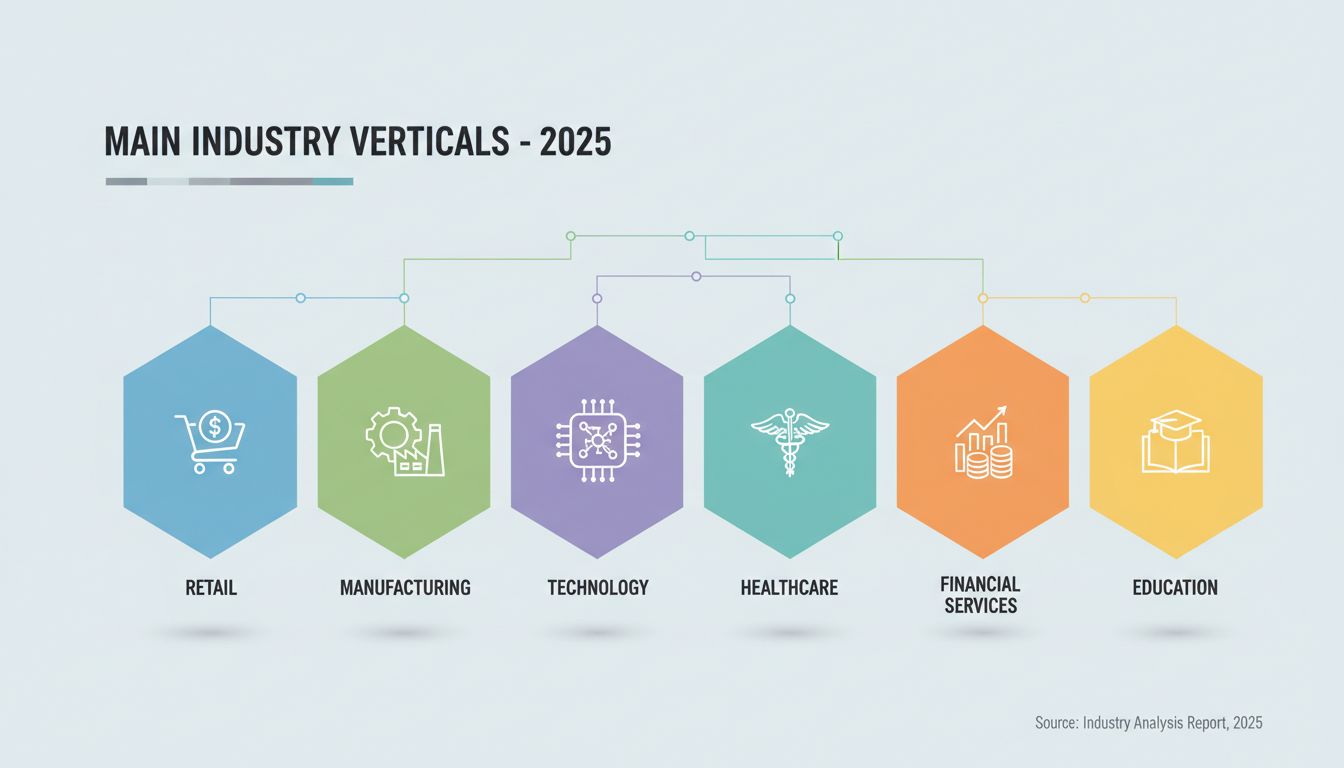
Discover the main business verticals including retail, manufacturing, technology, healthcare, and financial services. Learn how vertical markets work and their ...
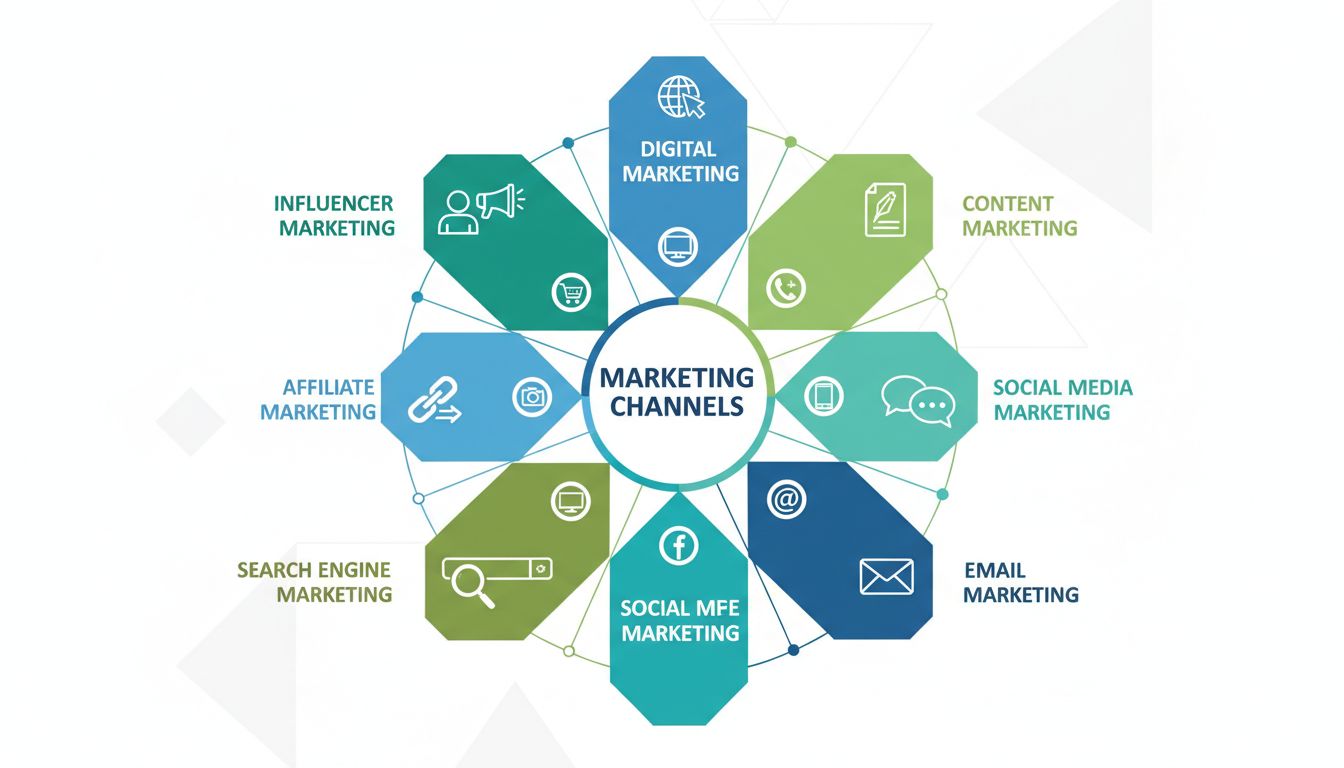
Explore the different marketing verticals including digital, content, social media, email, search engine, affiliate, and influencer marketing. Learn how to leve...
Join our community of happy clients and provide excellent customer support with Post Affiliate Pro.




Cookie Consent
We use cookies to enhance your browsing experience and analyze our traffic. See our privacy policy.