


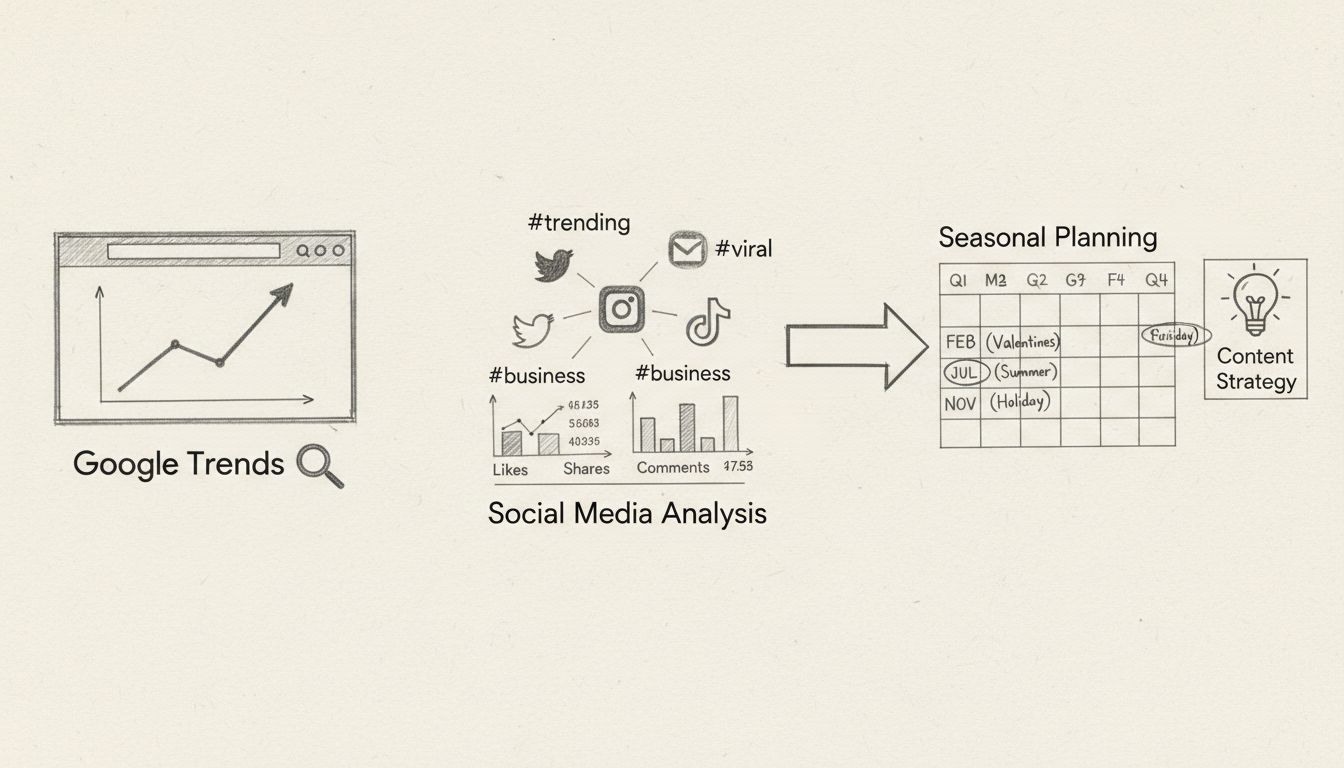
How to Start a Viral Marketing Campaign: Complete Step-by-Step Guide
Learn the essential steps to launch a successful viral marketing campaign in 2025. Discover proven strategies for audience targeting, content creation, influenc...
11 min read
Viral marketing is a promotional strategy that relies on individuals sharing a brand’s message, content, or product with their own networks — producing rapid, exponential exposure at a fraction of the cost of paid advertising.
On this page
Viral marketing is a promotional strategy that relies on individuals sharing a brand’s message, content, or product with their own networks — producing rapid, exponential exposure at a fraction of the cost of paid advertising.
The term was coined by Harvard Business School professor Jeffrey Rayport in a 1996 Fast Company article, “The Virus of Marketing.” He argued that marketers could learn from how biological viruses spread: infect a host, replicate, and reach new hosts through that host’s social contacts. The internet gave that analogy practical force. A compelling piece of content could now “infect” one user, who shares it with five, who each share it with five more — a cascade that traditional media buying cannot replicate at the same cost.
Messaging apps like WhatsApp and Telegram also drive significant peer-to-peer sharing. The core mechanism — word-of-mouth amplified by digital networks — remains the same, but the platforms and algorithms that determine what spreads have evolved.

Set up advanced tracking in minutes. No credit card required.
Viral marketing follows a mechanical sequence, even if the outcome feels unpredictable.
The K-factor measures how many new users each existing user brings in:
Most campaigns never reach K > 1. Those that do — the ALS Ice Bucket Challenge, Dollar Shave Club’s launch video — achieve a compounding effect where each wave of sharing is larger than the last.
What do most viral marketing campaigns have in common? Research and case studies point to six recurring elements.
Content that evokes high-arousal emotions spreads more. Jonah Berger’s research in Contagious: Why Things Catch On identifies awe, anger, anxiety, and humor as the strongest sharing triggers. Low-arousal emotions like sadness or contentment produce less sharing. The ALS Ice Bucket Challenge combined humor (watching someone get drenched) with awe (supporting a cause), hitting two high-arousal triggers simultaneously.
People share useful information. Spotify Wrapped succeeds because it gives users personalized data they want to display — their own listening habits packaged as a status symbol. The content has inherent utility for the sharer.
Sharing signals identity. When someone shares a Duolingo TikTok or a clever brand meme, they are telling their network something about who they are: funny, culturally aware, in on the joke. Content that makes the sharer look good travels further.
Viral content wraps a message in narrative. Dollar Shave Club’s launch video did not list razor features; it told a story about an absurdly overpriced industry, delivered by a founder walking through a warehouse with deadpan humor. The story carried the pitch.
Greggs launched its vegan sausage roll during Veganuary, a month when the cultural conversation was already about plant-based eating. Piers Morgan’s outraged tweet amplified the campaign further. Timing does not guarantee virality, but it lowers the friction for initial sharing.
The 3-3-3 rule is a practical framework for structuring content for sharing:
Be the first to know about new features and product updates.
Viral marketing offers significant upside, but it carries risks that traditional advertising does not.
| Pros | Cons |
|---|---|
| Low distribution cost: Reach is earned through shares, not media spend. A campaign can reach millions on a production budget alone. | Unpredictable: There is no repeatable formula. Most planned viral campaigns fail to gain traction. |
| Massive reach potential: Content can cross platforms, languages, and demographics organically. | Short attention lifespan: Viral fame fades fast. Today’s trending topic is tomorrow’s forgotten feed item. |
| Authenticity and trust: Peer-shared content carries more credibility than a brand ad. People trust friends more than brands. | Loss of message control: Once content spreads, the brand cannot control how it is interpreted, remixed, or criticized. |
| Brand awareness lift: A successful campaign can make a little-known brand a household name in weeks. | Negative backlash risk: Content perceived as tone-deaf, exploitative, or inauthentic can trigger a wave of negative attention. |
| Engagement and community building: Viral content often sparks conversation, user-generated content, and community formation. | Difficult ROI measurement: Attributing sales or brand equity gains directly to a viral moment is analytically complex. |
The same speed that makes viral marketing powerful also makes it dangerous. A campaign that misses the mark — culturally insensitive humor, a challenge that endangers participants, a message perceived as exploitative — can generate millions of negative impressions before the brand has time to respond. Brands pursuing viral strategies need a crisis response plan ready before content goes live, not after.
Examining campaigns that broke through reveals patterns that are useful even if they cannot be precisely replicated.
Participants filmed themselves dumping ice water over their heads, nominated others to do the same within 24 hours, and encouraged donations to ALS research.
Why it worked: Simple, repeatable format. Social pressure through nomination. High-arousal emotional mix (humor + cause). Low barrier to participation. Celebrity adoption created cascading media coverage.
A 90-second YouTube video featuring founder Michael Dubin delivering a deadpan monologue while walking through a warehouse.
Why it worked: Perfectly executed humor. Clear value proposition embedded in entertainment. Founder-as-character made the brand memorable. The video was the pitch, and people shared the pitch voluntarily.
Every December, Spotify delivers users a personalized summary of their year in listening — top artists, genres, minutes streamed — packaged as bright, shareable graphics optimized for Instagram Stories and TikTok.
Why it works: Inherent practical and social value. Users share because the data is about them. The format is designed for social platforms. It repeats annually, building anticipation.
Duolingo’s TikTok account, featuring its green owl mascot in unhinged, trend-surfing videos, has accumulated millions of followers and billions of views. The content is produced on a modest budget with a small social team.
Why it works: Brand mascot as personality. Rapid trend-jacking keeps content culturally current. Humor that appeals to Gen Z and Millennial audiences. Consistency: frequent posting builds algorithmic momentum.
UK bakery chain Greggs launched a vegan sausage roll with a slick parody of an Apple product launch video.
Why it works: Perfect timing (Veganuary). Format parody made the content self-aware and shareable. Piers Morgan’s outraged tweet created a second wave of earned media. The controversy amplified reach without brand spend.
No process guarantees virality, but the following steps increase the probability by building content around proven sharing mechanics.
Identify one hook — humor, awe, outrage, inspiration — and build the entire piece around it. Product features are not a hook. If the message cannot be summarized in one sentence, simplify it.
Match the format to where your target audience actually spends time, not where you wish they did.
Launch content through influencers, brand advocates, or power users whose shares carry reach and credibility. Seeding concentrates initial signal where it is most likely to trigger secondary sharing. Paying to reach a cold audience from day one is less efficient than activating existing communities.
Make sharing effortless. Embed share buttons. Design content that works natively on each platform — do not ask users to click through to an external site to understand the message. The fewer steps between viewing and sharing, the higher the share rate.
Track engagement velocity in the first hours after launch. If a particular platform or demographic is responding more strongly, shift resources there. If a comment thread reveals an interpretation you did not anticipate, address it. Viral campaigns that sustain momentum are actively managed, not set and forgotten.
Viral marketing is often described as “low cost,” but that refers to distribution cost, not total investment.
Duolingo’s TikTok content operates at this level.
Micro-influencers (10K–50K followers) often deliver higher engagement per dollar than macro-influencers. This is not the viral mechanism itself but a catalyst to reach the audience that might start sharing.
Vanity metrics — views and likes — tell only part of the story. A structured measurement framework separates genuinely impactful campaigns from those that generated noise without results.
| Metric | What It Measures | Why It Matters |
|---|---|---|
| Reach | Unique users exposed to the content | Top-line scale indicator |
| Engagement rate | Likes, comments, shares ÷ reach | Signals content resonance |
| Share rate | Shares ÷ reach | The core viral metric — measures pass-along behavior |
| Virality coefficient (K) | New users generated per existing user | K > 1 indicates exponential growth |
| Click-through rate | Clicks to destination ÷ impressions | Measures intent beyond passive viewing |
| Conversion rate | Desired actions (signups, purchases) ÷ clicks | Ties viral reach to business outcomes |
Viral reach is inherently harder to attribute than paid reach. A viewer may see a shared TikTok, search for the brand days later, and convert through a branded search ad — the viral content drove the purchase, but last-click attribution credits the search ad. Multi-touch attribution models and post-campaign brand-lift studies help fill this gap.
For affiliate marketers specifically, tracking parameters embedded in shared links — UTM codes, affiliate IDs, or referral tokens — can capture the path from share to conversion. Affiliate tracking software that preserves attribution through the sharing chain is essential for measuring viral campaign ROI in performance marketing contexts.
Viral marketing and affiliate marketing intersect in a practical way: affiliates are natural distribution nodes for viral content, and viral content creates opportunities for affiliate-driven conversions.
Viral content created by your brand can include affiliate tracking links that survive the sharing cascade. When a viewer sees a viral video, searches for the product, and purchases, an affiliate program with appropriate tracking can capture that path. More directly, brands can:
Affiliates who build audiences on social platforms are positioned to monetize viral moments. A creator whose TikTok reviewing a product goes viral can earn commissions on the resulting traffic — provided their affiliate links are visible and trackable. Practical steps:
Program managers can treat viral potential as a recruitment and retention signal:
Viral marketing is not a universal strategy. It fits some brands, products, and goals better than others.
Ask three questions before pursuing a viral strategy:
Discover how viral marketing strategies can amplify your affiliate marketing efforts and drive exponential growth.
Learn the essential steps to launch a successful viral marketing campaign in 2025. Discover proven strategies for audience targeting, content creation, influenc...
Video marketing uses video to promote brands and drive action. Learn types, strategy, and how it powers affiliate programs.
What is email marketing? Using targeted emails to promote products, nurture leads, and drive sales.
Join our community of happy clients and provide excellent customer support with Post Affiliate Pro.



Cookie Consent
We use cookies to enhance your browsing experience and analyze our traffic. See our privacy policy.