



How to Find Affiliates to Promote Your Business
effective strategies to find quality affiliates for your business and determine how many you need to promote your products.
9 min read
AffiliateMarketing
BusinessGrowth
+3

A practical guide to finding affiliates in 2026: where to look, how to reach out, what makes your offer attractive, and how to spot affiliates already promoting your competitors.
If you have ever typed “how do I find affiliates” into Google at 11 p.m., you are in good company. It is one of the most common questions we hear from businesses starting or scaling an affiliate program , and honestly, it is a fair one. Setting up the program is the easy part. Finding people who actually want to promote your product, and who will do it well, is where most businesses get stuck.
The good news is that affiliates are not hiding. They are already active on the networks, blogs, social platforms, and communities your customers use every day, you just need to know where to look and how to make your program worth their time. This guide walks through eleven ways to find them, what actually makes an affiliate say yes to your program, and how to keep the good ones once you have them.
It is tempting to treat affiliate recruitment as a numbers game: the more affiliates you sign up, the more sales you will get. In practice, a handful of well-matched affiliates who genuinely believe in your product will outperform a long list of inactive sign-ups every time.
Affiliate marketing works because affiliates have already earned their audience’s trust. When they recommend something, it reads as advice from someone the reader follows, not as promotional content from a brand. That trust is also why affiliates are selective. The best affiliates will not risk their reputation on a product that does not fit their audience, so finding affiliates is really about finding the right match, not the biggest list.
It also pays for itself in the cost structure. Because affiliate marketing runs on commission , you only pay when an affiliate actually generates a sale or a lead, so a slow month of recruitment does not put your budget at risk the way a paid ad campaign would. That structure is also why the channel keeps attracting more businesses every year: annual US affiliate marketing spending is projected to reach $13.2 billion in 2026 (Statista ), and every dollar of that is going toward finding and paying affiliates, not banner impressions nobody clicks.

Before you go looking, it helps to know what you are looking for. A good affiliate for your product usually checks most of these boxes:
None of that requires a celebrity following. Some of the most reliable affiliates are niche bloggers or small creators nobody outside their community has heard of, and they are usually far easier to reach than an influencer with a management agency in the way.

Set up advanced tracking in minutes. No credit card required.
Every strategy below works better once you know exactly who you are trying to reach. Look at your existing customer data and try to find patterns: age range, buying behavior, the content they engage with, the problems they came to you to solve. That profile becomes your buyer persona, and it is the same profile you should be matching affiliates against.
Once you know your audience, it becomes much easier to spot the right affiliates who already have influence with that same group. And once affiliates are on board, using trackable links lets you see, in real numbers, which of them are actually driving traffic and sales to your website.
With your audience defined, here are the channels and tactics that consistently bring in real, working affiliates.
This is one of the fastest ways to find affiliates, and one of the most overlooked. If someone is already reviewing, comparing, or linking to a competitor’s product, they have already proven two things: they understand your niche, and they know how to write content that converts.
Run your competitor’s domain through a backlink tool such as Ahrefs or Semrush and filter the results for review sites, “best of” roundups, and comparison articles. You can also search directly for “[competitor] review,” “[competitor] alternative,” or “[competitor] vs,” and check whether the competitor publishes its affiliate network on its own site, since that tells you exactly where to apply. For the full step-by-step process, including which search operators work best and how to spot which network a competitor uses, see our guide on how to find your competitors’ affiliates .
Bloggers were some of the very first affiliates, and they are still one of the most reliable sources of steady traffic. Their communities come back to them specifically for recommendations, which puts a blogger’s endorsement closer to a referral from a friend than a typical ad.
Search for blogs that already cover your industry, read a few of their recent posts so your outreach sounds personal rather than mass-sent, and invite them to join with a working affiliate link . Be upfront about your commission rate , payment schedule, and what marketing materials you will provide. Programs that lay all of this out clearly, instead of making bloggers dig for it, consistently win more of the affiliates in the most profitable niches .
Affiliate networks are third-party marketplaces where affiliates browse for programs to join and merchants list their offers. Because thousands of affiliates already have accounts on these platforms, joining one puts your program in front of people who are actively looking for something new to promote, rather than waiting for them to find you.
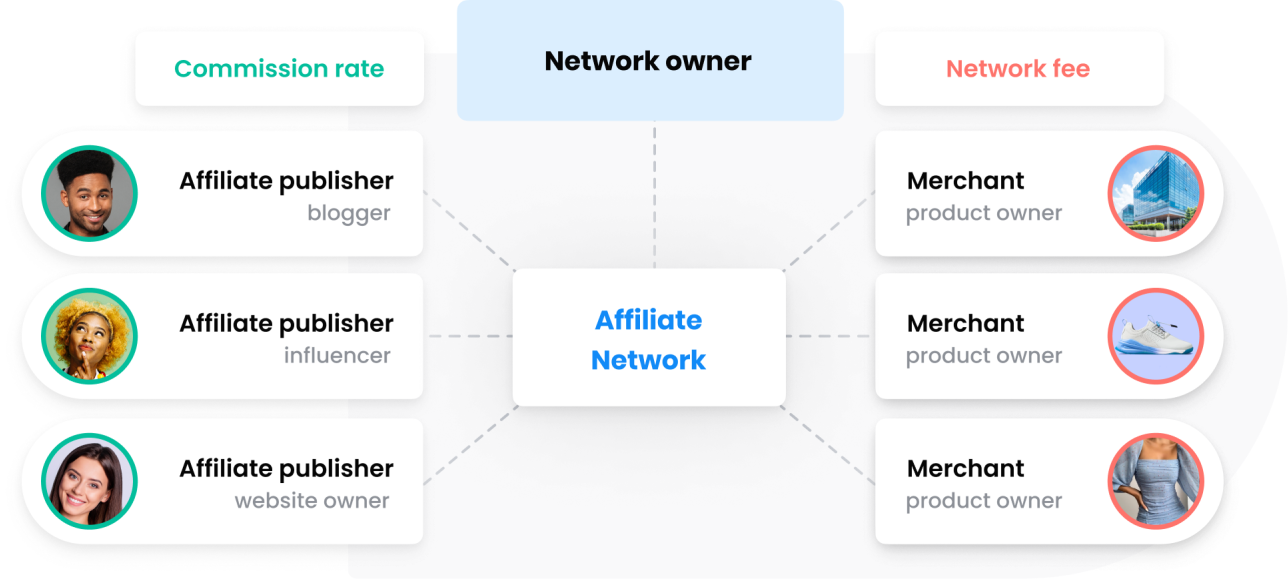
When you set up your listing, write clear terms and conditions to filter out fraudulent sign-ups while making your commission and bonuses attractive enough to catch the attention of top performers. It also helps to get accepted with a polished, complete profile, since networks and affiliates both judge a program by how finished it looks on day one. Keep in mind that a network is a shortcut to affiliates, not a replacement for your own program: you keep more control, better margins, and a direct relationship with your affiliates by running your own program alongside, or instead of, a network listing.
Influencers bring the same trust advantage as bloggers, on platforms where their audience spends even more time. You do not need to chase the biggest names first. Micro-influencers with smaller, highly engaged followings often reply faster, negotiate less, and convert their audience at a rate that surprises brands used to only working with bigger names.
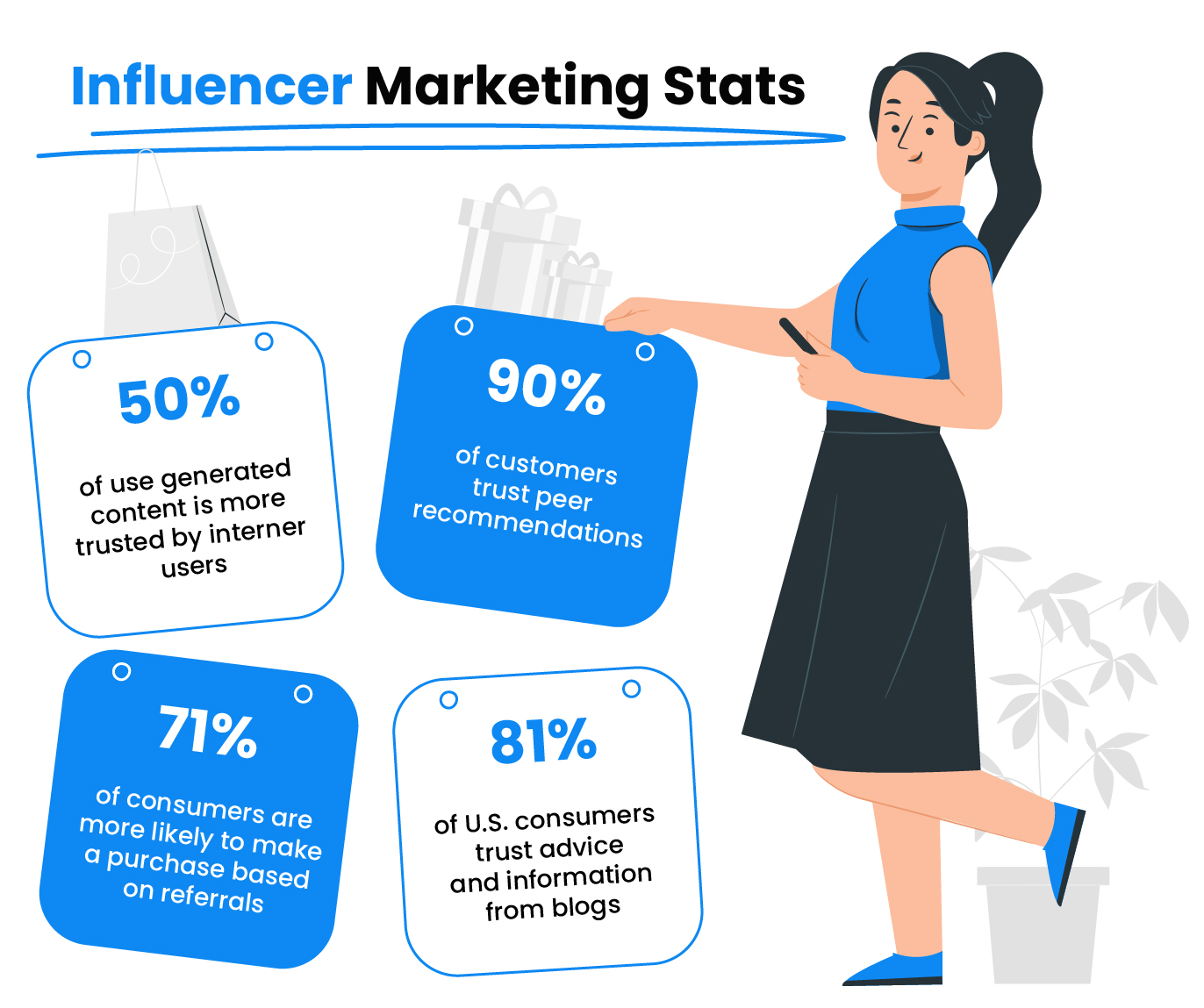
If direct outreach takes more time than you have, an affiliate recruitment agency can shortlist relevant influencers for you, though it comes at a cost that direct outreach does not.
Social media is where a lot of niche communities live, and searching hashtags relevant to your industry is often the fastest way to find them. It puts you directly in front of groups and forums full of people who create content in your space, and it also surfaces the influencers worth reaching out to first. Engage genuinely before pitching anything: comment, answer questions, and build a bit of familiarity. Cold pitches convert far better once the person has already seen your name in their feed. Targeted social ads can extend this further, putting your program in front of relevant creators you would not have found by searching alone.
A referral program turns your happiest customers into affiliates, and it works because the recommendation comes from someone the buyer already knows and trusts, which is an even stronger endorsement than a stranger’s review. Set clear rewards, make the referral link or code easy to share, and communicate the terms plainly so nobody is confused about how or when they get paid.
Most businesses only think of ads as a way to reach customers, but Facebook Ads, Google Ads, and other platforms can just as easily be aimed at potential affiliates . Target the demographics and interests of your ideal affiliate persona, and consider placing ads on sites that list affiliate programs , plus forums and communities specific to your industry, since that is where people actively looking for a new program to join tend to gather. If you would rather skip the ad spend entirely, our guide to free ways to find affiliates covers the no-budget version of this same recruitment process.
Forums and communities related to your industry are full of affiliates at every experience level, including newcomers who are actively looking for their first program. Spend time there before you pitch anything. Answer questions, share something useful, and build a bit of credibility first, then let people know your program exists. A quick search for “[your niche] affiliate forum” is usually enough to find the most relevant communities to start in.
Affiliate summits bring together merchants, networks, and affiliates who are all there specifically to make new connections, which makes them one of the most efficient places to find committed partners face to face. Beyond direct recruitment, these events are also a good way to learn what is working for other programs in your industry right now.
SEO is not just for attracting customers. Affiliates researching a niche typically start with a search engine too, looking for programs to join the same way a customer looks for a product to buy. If your affiliate program page is not optimized and easy to find, you are relying entirely on outbound outreach to fill a channel that should also be pulling candidates in on its own.

Email still works, and it is one of the more cost-effective ways to reach people who have already shown some interest in your niche, such as newsletter subscribers or leads from an industry list. A good recruitment email states the commission rate and earning potential clearly, links straight to your program page, and includes the promotional materials needed to get started right away, so signing up feels like a five-minute decision rather than homework.
Be the first to know about new features and product updates.
Finding affiliates is only half the job. Most rejections do not happen because the affiliate dislikes your product, they happen because the program itself looks unfinished. A few things consistently move the decision in your favor:
Recruitment does not end the moment someone signs up. Onboarding matters just as much as finding affiliates in the first place, especially in higher-trust niches like finance or SaaS, where a clear compliance step and a branded portal go a long way toward onboarding premium affiliate partners who actually stick around.
Once affiliates are active, monitor performance regularly, using a program health check as your baseline, confirm affiliates are sticking to your program’s terms, and step in with support when someone is underperforming instead of just letting the relationship go quiet. A well-built affiliate dashboard makes this easier by putting real-time performance, payment status, and communication in one place, and Post Affiliate Pro’s AI features can flag unusual activity, such as a sudden spike in suspicious transactions, before it turns into a bigger problem.
Transparency does the rest of the work. Be upfront about your terms and conditions , including commission rate and payment schedule, and be just as open with affiliates about how their own performance looks. Affiliates who can see their numbers clearly, and who trust that they will be paid on time and fairly, are the ones who stick around and keep promoting. And if growth stalls even though recruitment looks steady, it is worth checking for the common signs a program has stopped growing before assuming the affiliates themselves are the problem.
Finding high-quality affiliates comes down to knowing your audience, showing up in the places those affiliates already are, and making your program easy to say yes to. Networks, competitor research, bloggers, influencers, social media, referrals, and a well-optimized program page all work, but they work best combined rather than relied on individually.
Once affiliates start signing up, an easy-to-use affiliate program page and reliable tracking software make the difference between a program that grows and one that quietly stalls. Post Affiliate Pro handles the tracking, commissions, and reporting side so you can spend your time on recruitment and relationships instead of spreadsheets. Try it today and see how much easier finding, and keeping, good affiliates can be.
Lucia is a talented content editor who ensures the seamless publication of content across multiple platforms.

Ready to grow your business? Discover top strategies, tools, and expert guidance to find and recruit the best affiliates for your program.
effective strategies to find quality affiliates for your business and determine how many you need to promote your products.

Looking for actionable ways to find affiliates for your business? essential tips to kickstart your affiliate marketing journey, build a unique identity
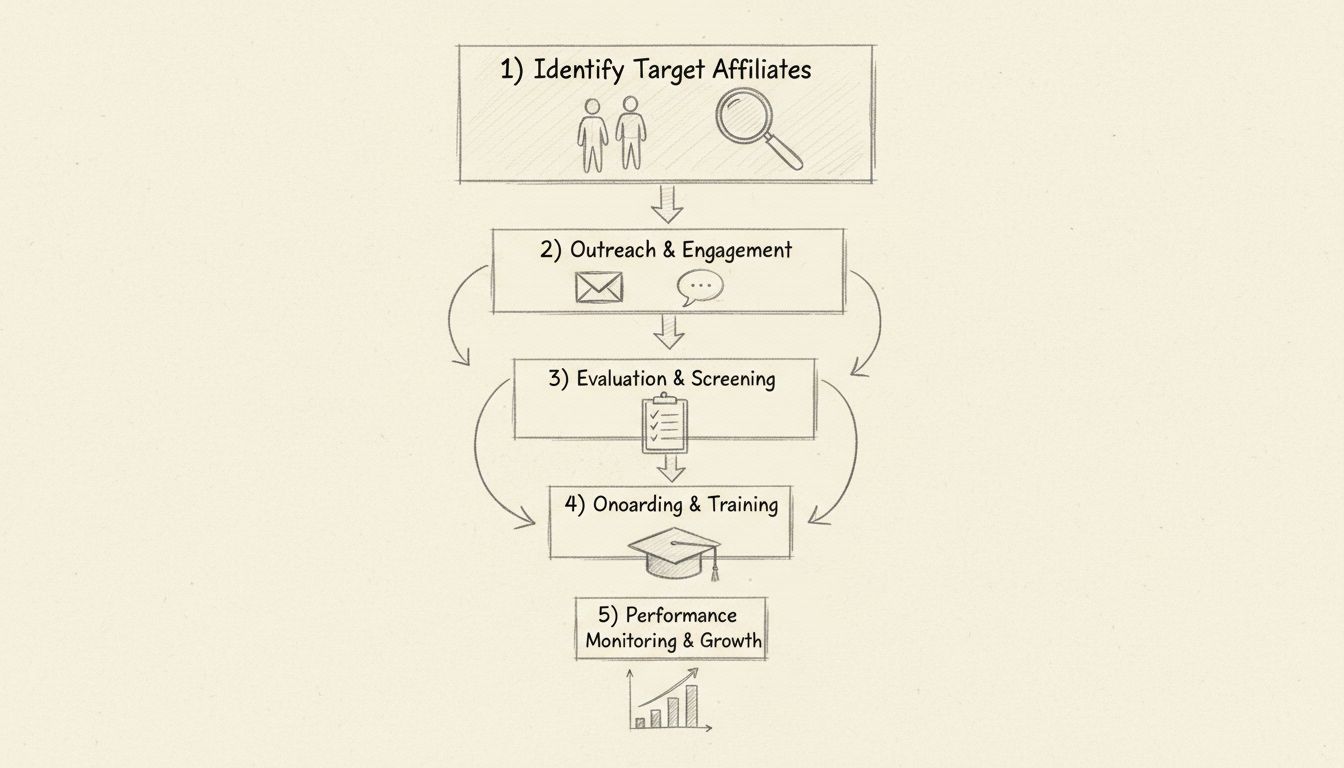
Learn proven strategies to find and recruit high-quality affiliates for your program. Discover customer conversion tactics, network strategies, influencer partn...
Join our community of happy clients and provide excellent customer support with Post Affiliate Pro.




Cookie Consent
We use cookies to enhance your browsing experience and analyze our traffic. See our privacy policy.